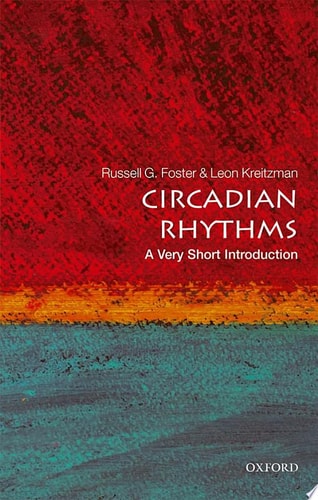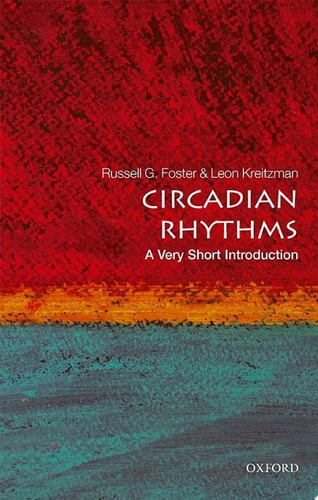
Circadian Rhythms: A Very Short Introduction
0
0
As an Amazon Associate and affiliate partner, Menrva Books earns from qualifying purchases. Learn more
Author Description
The earth's daily rotation affects just about every living creature. From dawn through to dusk, there are changes in light, temperature, humidity, and rainfall. However, these changes are regular, rhythmic and, therefore, predictable. Thus, the near 24 hour circadian rhythm is innate: a genetically programmed clock that essentially ticks of its own accord. This Very Short Introduction explains how organisms can "know" the time and reveals what we now understand of the nature and operation of chronobiological processes. Covering variables such as light, the metabolism, human health, and the seasons, Foster and Kreitzman illustrate how jet lag and shift work can impact on human well-being, and consider circadian rhythms alongside a wide range of disorders, from schizophrenia to obesity. ABOUT THE SERIES: The Very Short Introductions series from Oxford University Press contains hundreds of titles in almost every subject area. These pocket-sized books are the perfect way to get ahead in a new subject quickly. Our expert authors combine facts, analysis, perspective, new ideas, and enthusiasm to make interesting and challenging topics highly readable.
Menrva's Summary
THE THESIS
This book investigates the biological mechanisms of circadian rhythms and how these internal clocks regulate the physiological processes of living organisms. Authors Leon Kreitzman and Russell Foster, both experts in the field of chronobiology, synthesize current scientific research to explain how genetic programming allows organisms to anticipate environmental changes. They argue that understanding these internal timekeeping systems is critical for addressing modern health challenges related to sleep, metabolism, and mental well-being.
THE SCOPE MAP
What You Will Find
- Biological mechanisms of the internal 24-hour clock
- Analysis of how light and environmental cues influence chronobiology
- Examination of health implications including jet lag, shift work, and obesity
- Discussion of the relationship between circadian rhythms and psychiatric disorders
Scope Limits
- Does not provide clinical medical advice or treatment protocols for specific sleep disorders
- Does not offer an exhaustive history of all biological timekeeping research
THE AUTHORITY PERSPECTIVE
This text is widely recognized as a concise and accessible entry point for students and laypeople interested in chronobiology. Experts frequently note that the authors successfully distill complex biological data into a format that remains rigorous without becoming overly dense for the general reader.
Page Count:
144
Publication Date:
2017-01-01
Publisher:
OUP Oxford
ISBN-10:
0191027472
ISBN-13:
9780191027475
Health
Science
Non-Fiction
Chronobiology
Biology