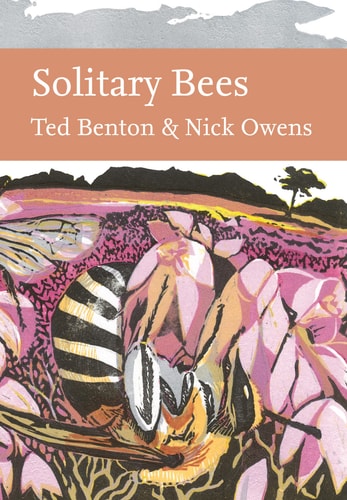
Solitary Bees
0
0
As an Amazon Associate and affiliate partner, Menrva Books earns from qualifying purchases. Learn more
Author Description
A completely up to date introduction to the commonest group of bees in Britain.Bees, for most people mean honey or bumble bees. In fact, the honey bees and bumblebees make up only a small proportion of the bee species that live in Britain, while the other bees are the great majority (230 or more species). Now it is recognised that these other bees play an important role in the pollination of crops and wild flowering plants. This has prompted much new research. A shift to gardening for wildlife has brought the solitary bees into sharper relief: many people now recognise mining bees, leaf-cutters and mason bees in their gardens, and even provide ‘bee hotels’ for them.This book draws on the great wave of new knowledge to give a wonderful insight into the complicated lives of solitary bees. The main focus is on the wonderful fascination and complexity in the behaviour and ecology of this remarkable group of insects. It uses many of the authors own observations alongside the studies provided by others, to discover the numerous strategies used by male bees to find females and persuade them to mate. It follows the females in their search for a place to make their nest, and their gathering of materials – symmetrical sections of leaves, mud, chewed-up leaf fragments, plant hair or resin – to make the cells into which they place a store of nectar and pollen and lay a single egg. We watch them sealing up the nest, securing it until the following year when the new generation appears. We explore the interactions between flowering plants and their bee visitors, asking what the plants get from the relationship, as well as how the bees select the plants they visit, and the ingenuity required to extract pollen, nectar and other rewards. Finally, we look at the places where bees flourish, highlighting what can be done to encourage bees and thus ensure they continue to pollinate our flowers and crops.
Menrva's Summary
THE THESIS
This book investigates the complex lives and ecological importance of Britain's solitary bees. Drawing on recent research and the authors' own observations, this work provides a comprehensive introduction to the 230+ species of bees that are not honeybees or bumblebees. It details their crucial role in pollinating crops and wild plants, a role that has gained new recognition with the rise of wildlife gardening and the provision of 'bee hotels'. The book explores the intricate behaviors of these insects, from mating strategies to nest construction and resource gathering.
THE SCOPE MAP
- Detailed examination of the behavior and ecology of solitary bees in Britain.
- Insights into mating strategies of male bees and nest-building behaviors of females.
- Analysis of the materials used for nest construction, such as leaves, mud, and resin.
- Exploration of the symbiotic relationships between flowering plants and bee pollinators.
- Discussion on how bees select plants and extract nectar, pollen, and other rewards.
- Guidance on how to encourage solitary bee populations to support pollination.
THE AUTHORITY PERSPECTIVE
This book is presented as a thorough and up-to-date introduction to solitary bees, reflecting a significant body of new research in the field. It highlights the ecological importance of these insects, particularly in the context of modern gardening practices and crop pollination. The authors integrate their own observations with existing studies to offer a detailed look at solitary bee behavior and life cycles.
Page Count:
496
Publication Date:
2023-05-11
Publisher:
William Collins
ISBN-10:
0008304556
ISBN-13:
9780008304553
Nature
Non-Fiction
Science
Animals
Ecology
Technology & Engineering
Zoology
Biological Diversity
Nature
Entomology
Agriculture
Animal Rights
Science
Botany
Environmental Conservation
Life sciences
Animals
Beekeeping
Insects & spiders
Community Tags
Similar Books














