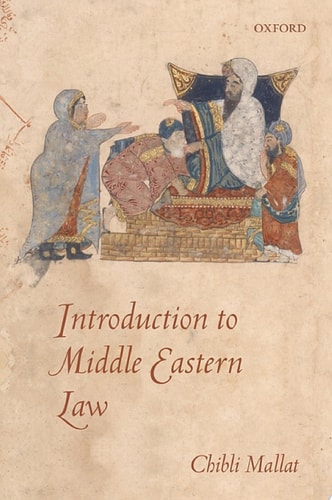
Introduction to Middle Eastern Law
0
0
As an Amazon Associate and affiliate partner, Menrva Books earns from qualifying purchases. Learn more
Author Description
This book provides an introduction to the laws of the Middle East, defining the contours of a field of study that deserves to be called 'Middle Eastern law'. It introduces Middle Eastern law as a reflection of legal styles, many of which are shared by Islamic law and the laws of Christian and Jewish Near Eastern communities. It offers a detailed survey of the foundations of Middle Eastern Law, using court archives and an array of legal sources from the earliest records of Hammurabi to the massive compendia of law in the Islamic classical age through to the latest decisions of Middle Eastern high courts. It focuses on the way legislators and courts conceive of law and apply it in the Middle East. It builds on the author's extensive legal practice, with the aim of introducing the Middle Eastern law's main sources and concepts in a manner accessible to non-specialist legal scholars and practitioners alike. The book begins with an exploration of the depth and variety of Middle Eastern law, introducing the concepts of shari'a, fiqh, and qanun, (which all mean 'law'), and dwelling on Islamic law as the 'common law' of the Middle East. It provides a historical introduction to the contemporary Middle East, exploring political systems, constitutional law, judicial review, the laws of tort and obligations, commercial law (including Islamic banking, company law, capital markets, and commercial arbitration); and examines legislative reform in family law and the position of women in the legal system. The author considers the interaction between Islamic and Western laws and includes a bibliography designed for further research into the jurisdictions and themes explored throughout the book.
Menrva's Summary
THE THESIS
This work investigates the foundational structures and evolving methodologies of Middle Eastern law, establishing it as a distinct and coherent field of legal study. Chibli Mallat, a scholar and practitioner with extensive experience in the region, synthesizes historical legal records with contemporary judicial practice. He argues that Middle Eastern law functions as a complex interplay of Islamic legal traditions, historical precedents, and modern legislative reforms, providing a framework for understanding how regional courts and legislators interpret legal authority.
THE SCOPE MAP
What You Will Find
- Historical analysis spanning from the Code of Hammurabi to modern high court decisions.
- Examination of core concepts including shari'a, fiqh, and qanun.
- Coverage of constitutional law, judicial review, torts, and commercial law including Islamic banking.
- Discussion of legislative reform regarding family law and the legal status of women.
Scope Limits
- The text does not provide an exhaustive case-by-case analysis of every individual nation-state in the region.
- It does not serve as a comprehensive practitioner's manual for litigation in specific local jurisdictions.
THE AUTHORITY PERSPECTIVE
Legal scholars and practitioners frequently cite this text as a foundational resource for navigating the intersection of traditional Islamic jurisprudence and modern civil law systems. Experts highlight the author's ability to distill dense historical and comparative legal data into a framework accessible to both academics and professionals.
Page Count:
487
Publication Date:
2007-01-01
Publisher:
OUP Oxford
ISBN-10:
0191021725
ISBN-13:
9780191021725
History
Professional Career & Trade
Legal History
Islamic Law
Constitutional Law
Comparative Law
Middle Eastern
Law
Community Tags
Similar Books