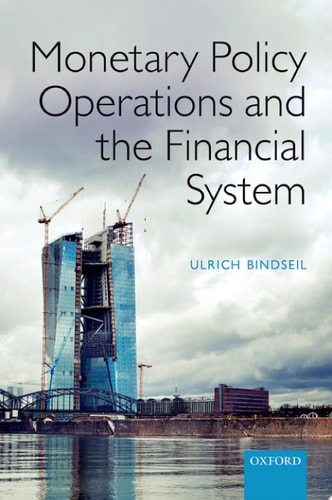
Monetary Policy Operations and the Financial System
0
0
As an Amazon Associate and affiliate partner, Menrva Books earns from qualifying purchases. Learn more
Author Description
Since 2007, central banks of industrialized countries have counteracted financial instability, recession, and deflationary risks with unprecedented monetary policy operations. While generally regarded as successful, these measures also led to an exceptional increase in the size of central bank balance sheets. The book first introduces the subject by explaining monetary policy operations in normal times, including the key instruments (open market operations, standing facilities, reserve requirements, and the collateral framework). Second, the book reviews the basic mechanics of financial crises as they have hit economies many times. The book then explains what central banks need to do to when financial markets and banks are impaired to fulfil their monetary policy and financial stability mandates. Besides demonstrating the need for non-conventional monetary policy measures, the book also highlights their dangers, such as moral hazard and increased central bank risk taking. The book draws a number of lessons from the crisis on non-conventional monetary policy operations, assessing what measures have worked well, and how a framework should be designed in future normal times such as to contribute to make financial crises less likely. Central bank monetary policy operations have traditionally been considered as a matter of practice, while the macroeconomic modelling of the transmission mechanism of monetary policy is regarded as a discipline relying on substantial theory ('monetary economics'). However, monetary policy operations can equally benefit from a theory, and from a normative framework to guide policy choices. The limited interest that monetary policy operations have found for many decades in academic economics may well have contributed to the many misunderstandings on central bank actions over recent years. This book provides a basis for a better theoretical understanding of real-world monetary policy operations.
Menrva's Summary
THE THESIS
This book investigates the theoretical and practical framework required for central banks to conduct effective monetary policy operations during both stable periods and financial crises. Ulrich Bindseil, a senior official with extensive experience in central banking, utilizes a combination of historical analysis and institutional mechanics to argue that monetary policy operations require a more rigorous theoretical foundation. He posits that by integrating normative frameworks into operational practice, central banks can better manage the risks associated with non-conventional measures and improve financial stability.
THE SCOPE MAP
What You Will Find
- Detailed analysis of standard instruments including open market operations, standing facilities, and collateral frameworks.
- Examination of the mechanics of financial crises and their impact on central bank balance sheets.
- Theoretical models for evaluating non-conventional monetary policy measures.
- Assessment of moral hazard and risk-taking implications for central banks.
Scope Limits
- The text focuses primarily on the operational mechanics of central banks rather than broad macroeconomic forecasting or political history.
- It does not provide a comprehensive history of every global central bank but focuses on the logic of operational frameworks.
THE AUTHORITY PERSPECTIVE
Experts and economists frequently cite this work as a foundational text for understanding the technical side of central banking operations. Readers often note the academic density of the prose, which provides a necessary bridge between practical banking operations and formal monetary theory.
Page Count:
320
Publication Date:
2014-01-01
Publisher:
OUP Oxford
ISBN-10:
019102645X
ISBN-13:
9780191026454
Economics
International institutions
Money & BankingMonetary Theory
Finance
Macroeconomics
Banking
Community Tags
Similar Books