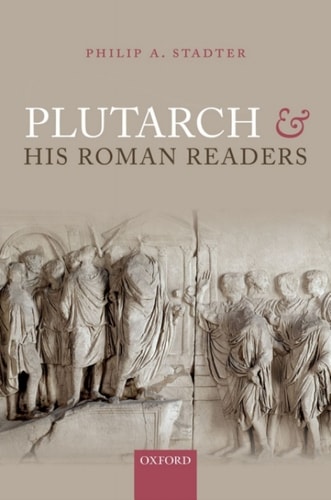
Plutarch and His Roman Readers
0
0
As an Amazon Associate and affiliate partner, Menrva Books earns from qualifying purchases. Learn more
Author Description
Plutarch's focus on the great leaders of the classical world, his anecdotal style, and his self-presentation as a good-natured friend and wise counsellor have appealed over the centuries to a wide audience, persons as diverse as Beethoven and Benjamin Franklin, Shakespeare and Harry Truman. This collection of essays on Plutarch's Parallel Lives examines the moral issues Plutarch recognized behind political leadership, and relates his writings to the audience of leading generals and administrators of the Roman empire which he aimed to influence, and to the larger social and political context of the reigns of the Flavian emperors and their successors, Nerva and Trajan, during which he wrote. The essays explore Plutarch's considered views on how his contemporaries could - and we ourselves can - learn from the successes and failures of the great men of the past.
Menrva's Summary
THE THESIS
This collection of essays investigates how Plutarch utilized his biographical works to influence the political and moral conduct of the Roman elite during the Flavian and Trajanic eras. Philip A. Stadter, a scholar of classical literature and history, synthesizes historical context with textual analysis to argue that Plutarch’s Parallel Lives served as a deliberate pedagogical tool. By examining the intersection of biography and political philosophy, the author demonstrates how Plutarch framed the actions of historical figures to provide actionable guidance for contemporary Roman administrators and military leaders.
THE SCOPE MAP
What You Will Find
- Analysis of the Parallel Lives in the context of the Flavian and Trajanic dynasties.
- Examination of Plutarch’s rhetorical strategies and self-presentation as a moral counselor.
- Discussion of the moral and political responsibilities inherent in Roman leadership.
- Insights into the reception of Plutarch’s work across diverse historical periods.
Scope Limits
- The text does not provide a comprehensive biography of Plutarch himself.
- It does not cover the entirety of Plutarch’s non-biographical corpus.
THE AUTHORITY PERSPECTIVE
Scholars recognize this collection as a significant contribution to the study of Plutarch’s political intent and his relationship with the Roman imperial administration. The text is frequently cited by classicists for its nuanced approach to the intersection of ancient biography and political theory.
Page Count:
440
Publication Date:
2014-01-01
Publisher:
OUP Oxford
ISBN-10:
0191028134
ISBN-13:
9780191028137
History
Biography
Philosophy
Literary Criticism
History & Surveys
Ancient - Rome
Greece biography
Rome biography
Political Leadership
Community Tags
Other Editions(3)

Similar Books