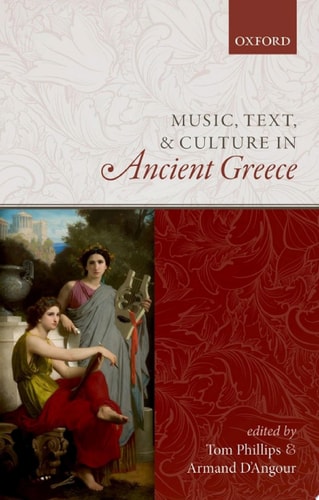
Music, Text, and Culture in Ancient Greece
0
0
As an Amazon Associate and affiliate partner, Menrva Books earns from qualifying purchases. Learn more
Author Description
What difference does music make to performance poetry, and how did the ancients themselves understand this relationship? Although scholars have long recognized the importance of music to ancient performance culture, little has been written on the specific effects that musical accompaniment, and features such as rhythmical structure and melody, would have created in individual poems. This volume attempts to answer these questions by exploring more fully the relationship between music and language in the poetry of ancient Greece. Arranged into two parts, the essays in the first half engage closely with the evidential and interpretative challenges posed by the interaction of ancient music and poetry, and propose original readings of a range of texts by authors such as Homer, Pindar, and Euripides, as well as later poets such as Seikilos and Mesomedes. While they emphasize different formal features, they also argue collectively for a two-way relationship between music and language: attention to the musical features of poetic texts, insofar as we can reconstruct them, enables us to better understand not only their effects on audiences, but also the various ways in which they project and structure meaning. In the second part, the focus shifts to ancient attempts to conceptualize interactions between words and music; the essays in this section analyse the contested place that music occupied in the works of Plato, Aristotle, Plutarch, and other critical writers of the Hellenistic and Imperial periods. Thinking about music is shown to influence other domains of intellectual life, such as literary criticism, and to be vitally informed by ethical concerns. These essays illustrate the importance of music for intellectual culture in ancient Greece and the ancients' abiding concern to understand and control its effects on human behaviour.
Menrva's Summary
THE THESIS
This volume investigates the symbiotic relationship between music and language in ancient Greek performance poetry and how this interaction shaped intellectual and cultural life. Editors Armand D'Angour and Tom Phillips, both established scholars in classics and musicology, curate a collection of essays that examine both the technical mechanics of musical accompaniment and the philosophical discourse surrounding its influence. The work argues that musical features—such as rhythm and melody—are essential to interpreting the meaning and impact of ancient texts, while also analyzing how ancient thinkers conceptualized the ethical and behavioral effects of music.
THE SCOPE MAP
What You Will Find
- Analysis of poetic works by Homer, Pindar, Euripides, Seikilos, and Mesomedes
- Philosophical critiques from Plato, Aristotle, and Plutarch
- Examination of the intersection between literary criticism and musical theory
- Exploration of the Hellenistic and Imperial periods
Scope Limits
- Does not provide a complete reconstruction of ancient Greek musical notation
- Does not cover non-Western musical influences on the Mediterranean basin
THE AUTHORITY PERSPECTIVE
Experts recognize this collection as a significant contribution to the study of ancient performance culture, noting its success in bridging the gap between musicology and classical philology. Readers frequently highlight the academic density of the prose, which is intended for scholars and advanced students of the humanities.
Page Count:
293
Publication Date:
2018-01-01
Publisher:
OUP Oxford
ISBN-10:
019251329X
ISBN-13:
9780192513298
Poetry
Philosophy
History
Musicology
Ancient Greece
English & College Success
Greek poetry
Greek & Roman
English
History & Surveys
Literary Criticism
Community Tags
Other Editions(3)

Similar Books







Reader Comments
Share Your Thoughts
No comments yet. Be the first to share your thoughts!