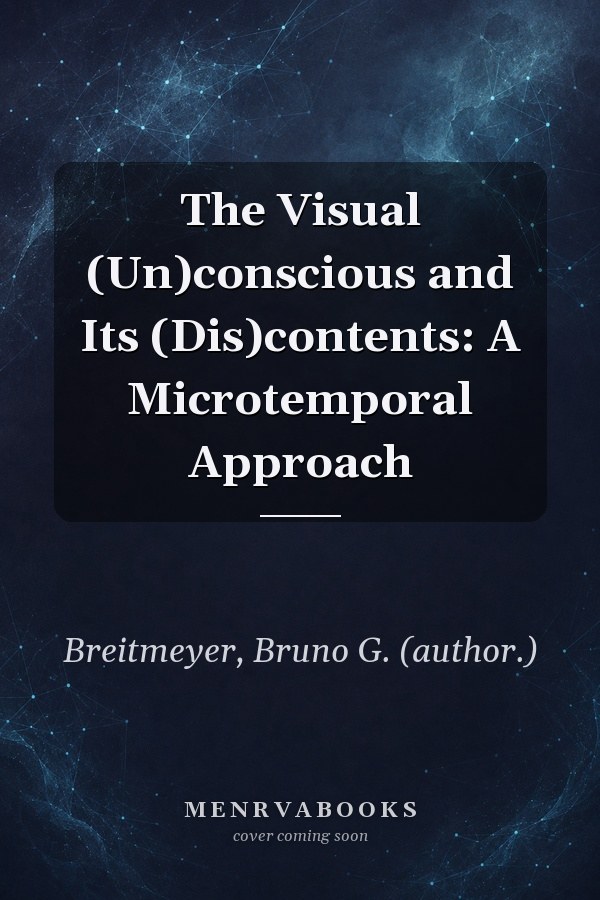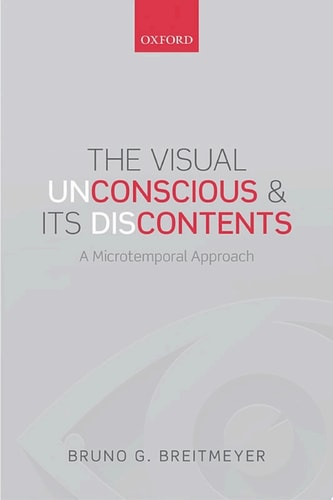
The Visual (Un)Conscious and Its (Dis)Contents: A Microtemporal Approach
0
0
As an Amazon Associate and affiliate partner, Menrva Books earns from qualifying purchases. Learn more
Author Description
Visual control of our actions can be unconscious as well as conscious. For example, when a pedestrian steps onto a street and then suddenly steps back, to avoid being hit by an oncoming car, the pedestrian's visual system has been able to detect the car very rapidly. Since the registration of the approaching car in conscious vision could take a few hundreds of milliseconds - possibly too long to avoid being struck by it, the rapid injury-avoiding action has relied on the oncoming car being detected at unconscious levels in the visual system. So how, and at what level in the visual system is a stimulus processed unconsciously? This book explores unconscious and conscious vision, investigated using psychophysical and brain-recording methods. These methods allow microtemporal analyses of visual processing during the interval, ranging from a few 10s to a few 100s of milliseconds, between a stimulus's impinging on the retinae and its eliciting a behavioral response or a conscious percept. By tying these findings to well-known neuroanatomical and physiological substrates of vision, the book presents and discusses theoretical and empirical approaches to, and findings on, conscious and unconscious vision. In addition to presenting an in-depth, integrative review of recent and ongoing scientific and scholarly research, the book proposes several avenues for directing future research in these areas. It also provides a well articulated theoretical and a detailed empirical base that points to the special importance of the processing of surface properties of visual objects to their conscious vision. Aimed at scientists and scholars in visual cognition, visual neuroscience and, more broadly, cognitive science - including that part of the philosophical community that is currently occupied with the mind-brain problem, the book sheds new light on and advances experimental, philosophical, and scholarly research on visual consciousness.
Menrva's Summary
THE THESIS
This book investigates the mechanisms and neural substrates that distinguish unconscious visual processing from conscious perception within the microtemporal window of human reaction. Bruno G. Breitmeyer, an established researcher in visual cognition, synthesizes decades of psychophysical data and neurophysiological evidence to argue that rapid, injury-avoiding behaviors rely on distinct, unconscious visual pathways. By analyzing the temporal gap between retinal stimulation and behavioral response, the author constructs a framework that links surface property processing to the emergence of conscious awareness.
THE SCOPE MAP
What You Will Find
- Microtemporal analysis of visual processing intervals ranging from 10 to 500 milliseconds.
- Integration of psychophysical methods and brain-recording techniques.
- Theoretical models linking neuroanatomical substrates to visual consciousness.
- Empirical evidence regarding the processing of surface properties in visual objects.
Scope Limits
- The text does not provide a general introduction to basic visual anatomy for laypeople.
- It focuses primarily on the mind-brain problem rather than clinical pathology or visual impairment.
THE AUTHORITY PERSPECTIVE
Experts recognize this work as a rigorous, specialized contribution to the field of visual neuroscience and cognitive philosophy. Readers frequently note the academic density of the prose, which is tailored specifically for researchers and scholars engaged in the study of consciousness.
Page Count:
245
Publication Date:
2014-01-01
Publisher:
OUP Oxford
ISBN-10:
0191020796
ISBN-13:
9780191020797
Psychology
Philosophy of
Neuroscience
Community Tags
Similar Books