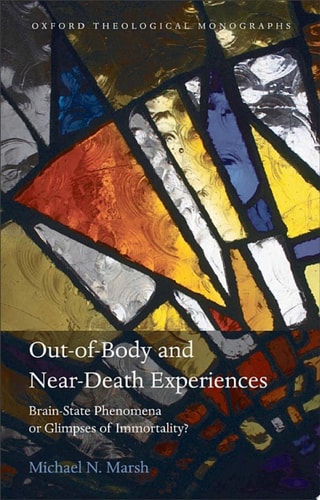
Out-of-Body and Near-Death Experiences: Brain-State Phenomena or Glimpses of Immortality?
0
0
As an Amazon Associate and affiliate partner, Menrva Books earns from qualifying purchases. Learn more
Author Description
Personalised accounts of out-of-body (OBE) and near-death (NDE) experiences are frequently interpreted as offering evidence for immortality and an afterlife. Since most OBE/NDE follow severe curtailments of cerebral circulation with loss of consciousness, the agonal brain supposedly permits 'mind', 'soul' or 'consciousness' to escape neural control and provide glimpses of the afterlife. Michael Marsh critically analyses the work of five key writers who support this so-called "dying brain" hypothesis. He firmly disagrees with such otherworldly 'mystical' or 'psychical' interpretations, ably demonstrating how they are explicable in terms of brain neurophysiology and its neuropathological disturbances. The original basis and thrust of Marsh's claim sees the recorded phenomenology as reflections of brains rapidly reawakening to full conscious-awareness, consistent with other reported phenomenologies attending recovery from antecedent states of unconsciousness: the "re-awakening brain" hypothesis. From this basis, Marsh also offers a re-classification of NDE into early and late phase sequences, thereby dismantling the untenable concepts of "core" and "depth" experiences. Marsh further provides a detailed examination of the spiritual and quasi-religious overtones accorded OBE/NDE, highlighting their inconsistencies when compared with classical accounts of divine disclosure, and the eschatological precepts of resurrection belief as professed credally. In assessing the implications of anthropological, philosophical, and theological concepts of 'personhood' and 'soul' as arguments for personal survival after death, Marsh celebrates the role of conventional faith in appropriating the expectant biblical promises of a 'New Creation'.
Menrva's Summary
THE THESIS
This work investigates whether out-of-body and near-death experiences constitute evidence for an afterlife or are instead products of neurophysiological processes occurring during brain recovery. Michael N. Marsh, drawing on his background in medical science and theology, challenges the interpretation of these phenomena as mystical or psychical events. He proposes the "re-awakening brain" hypothesis, arguing that reported experiences are consistent with the brain's return to conscious awareness following periods of cerebral ischemia and unconsciousness.
THE SCOPE MAP
What You Will Find
- Analysis of the "dying brain" hypothesis versus the "re-awakening brain" model
- A re-classification of near-death experiences into early and late phase sequences
- Critical examination of the spiritual and religious interpretations of OBE/NDE
- Philosophical and theological assessment of personhood and the soul
Scope Limits
- Does not provide empirical evidence for the existence of an afterlife
- Does not explore non-Western or non-Christian theological perspectives on the soul
THE AUTHORITY PERSPECTIVE
Experts and readers often note the academic density of the prose, which bridges complex neurophysiological data with theological inquiry. The text is recognized as a rigorous critique of popular interpretations of near-death phenomena, serving as a specialized resource for those interested in the intersection of science and faith.
Page Count:
336
Publication Date:
2010-01-01
Publisher:
OUP Oxford
ISBN-10:
0191610127
ISBN-13:
9780191610127
Religion
Psychology
Death & dying
Neuroscience
Theology
Philosophy of
Community Tags
Other Editions(3)
Similar Books











Reader Comments
Share Your Thoughts
No comments yet. Be the first to share your thoughts!