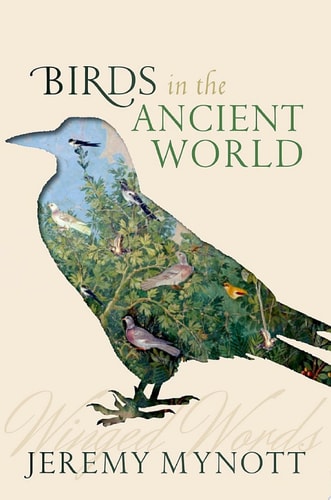
Birds in the Ancient World: Winged Words
0
0
As an Amazon Associate and affiliate partner, Menrva Books earns from qualifying purchases. Learn more
Author Description
Birds pervaded the ancient world. They impressed their physical presence on the daily experience and imaginations of ordinary people in town and country alike, and figured prominently in literature and art. They also provided a fertile source of symbols and stories in their myths and folklore, and were central to the ancient rituals of augury and divination. Jeremy Mynott's Birds in the Ancient World: Winged Words brings together all this rich and fascinating material for the modern reader. Using quotations from well over a hundred classical Greek and Roman authors, all of them translated freshly into English, and nearly a hundred illustrations from ancient wall-paintings, pottery, and mosaics, Birds in the Ancient World illustrates the many different roles birds played in popular culture: as indicators of time, weather, and the seasons; as a resource for hunting, eating, medicine, and farming; as domestic pets and entertainments; and as omens and intermediaries between the gods and humankind. There are also selections from early scientific writings about birds, as well as many anecdotes and descriptions from works of history, geography, and travel. Jeremy Mynott acts as a stimulating guide to this varied material, using birds as a prism through which to explore both the similarities and the often surprising differences between ancient conceptions of the natural world and our own. His book is an original contribution to the flourishing interest in the cultural history of birds and to our understanding of the ancient cultures in which birds played such a prominent part.
Menrva's Summary
THE THESIS
This work investigates the multifaceted role of birds in the daily life, mythology, and scientific thought of ancient Greek and Roman civilizations. Jeremy Mynott, an expert in classical studies and ornithology, synthesizes a vast array of primary source material to demonstrate how avian species functioned as symbols, resources, and divine messengers. By examining these historical perspectives, the author constructs a framework that contrasts ancient environmental perceptions with contemporary ecological understanding.
THE SCOPE MAP
What You Will Find
- A collection of translated excerpts from over one hundred classical Greek and Roman authors.
- Nearly one hundred visual references including ancient wall-paintings, pottery, and mosaics.
- Analysis of birds as indicators of seasonal change, agricultural resources, and tools for divination.
Scope Limits
- The text focuses primarily on the Mediterranean basin and does not provide an exhaustive global history of ornithology.
- It does not offer a modern biological field guide for the species discussed.
THE AUTHORITY PERSPECTIVE
Scholars and readers frequently note the accessibility of the prose despite the academic depth of the source material. Experts highlight this as a foundational text for those interested in the intersection of classical history and the cultural history of the natural world.
Page Count:
475
Publication Date:
2018-01-01
Publisher:
OUP Oxford
ISBN-10:
0191022721
ISBN-13:
9780191022722
History
Cultural History
Ancient Greece
Folklore
Rome
Animals And Civilization
Ancient - Rome
Birds_greece
Ornithology
Ancient History
Birds_folklore
Community Tags
Similar Books