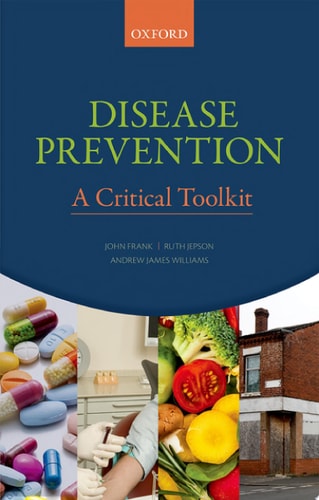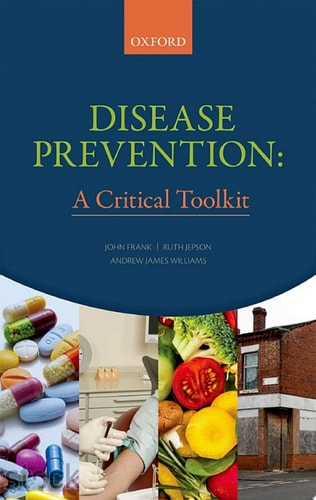
Disease Prevention: A Critical Toolkit
0
0
As an Amazon Associate and affiliate partner, Menrva Books earns from qualifying purchases. Learn more
Author Description
Preventive medical interventions and non-medicalised public health programmes that promise health benefits in the future, from actions taken now, carry a strong ethical requirement of 'first, do no harm' or primum non nocere. New preventive advice and interventions are being promoted on a daily basis, Disease Prevention: A Critical Toolkit provides a set of appraisal tools to guide those considering a preventive action to make sure that it is effective (does more good than harm), efficient (is a competitive use of scarce resources), and equitable in its impact across society. Case studies and worked examples illustrate the risks and benefits of specific preventive interventions. Divided into 10 chapters this practical and concise book focuses on multiple aspects of prevention including the hierarchy of preventive options; the assessment of causation; finding and appraising scientific evidence; prevention directed at entire populations (as opposed to individuals); measuring chronic disease risk factors and medically managing them: statin treatment of high cholesterol; PSA screening for prostate cancer; genetic screening for future disease risk; and assessing the health equity implications of prevention. Aimed at front-line public health and primary care professionals, Disease Prevention: A Critical Toolkit will equip them with the up-to-date skills necessary to help them better inform and serve their patients and communities.
Menrva's Summary
THE THESIS
This book investigates the ethical and practical requirements for implementing preventive medical interventions by providing a critical framework to ensure such actions are effective, efficient, and equitable. The authors, Andrew J. Williams, John Frank, and Ruth Jepson, leverage their expertise in public health and clinical practice to address the proliferation of preventive advice. They argue that practitioners must move beyond simple implementation to rigorously appraise the potential for harm, resource allocation, and societal impact before recommending interventions to patients or populations.
THE SCOPE MAP
What You Will Find
- A 10-chapter framework for evaluating preventive medical options.
- Methodologies for assessing causation and appraising scientific evidence.
- Analysis of specific interventions including statin treatment, PSA screening, and genetic testing.
- Tools for measuring health equity implications in public health programs.
Scope Limits
- The text does not provide a comprehensive clinical manual for treating specific diseases.
- It does not cover the political lobbying processes involved in national health policy formation.
THE AUTHORITY PERSPECTIVE
Professionals in primary care and public health frequently cite this text as a practical resource for navigating the complexities of evidence-based prevention. Experts highlight the book's utility in balancing clinical efficacy with the ethical imperative to avoid unnecessary harm in asymptomatic populations.
Page Count:
240
Publication Date:
2016-01-01
Publisher:
OUP Oxford
ISBN-10:
019103858X
ISBN-13:
9780191038587
Epidemiology
Allied Health
Health Policy
Public Health
Medical
Professional Development