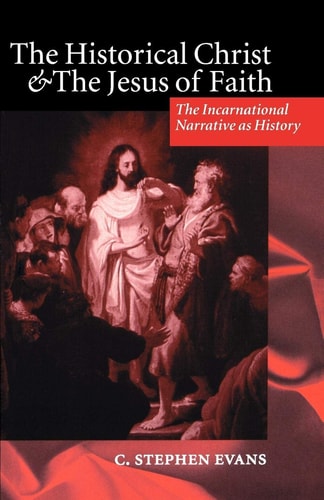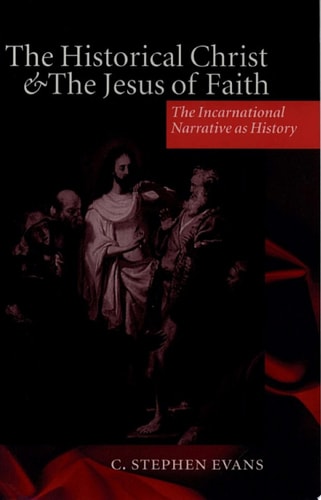
The Historical Christ and the Jesus of Faith: The Incarnational Narrative as History
0
0
As an Amazon Associate and affiliate partner, Menrva Books earns from qualifying purchases. Learn more
Author Description
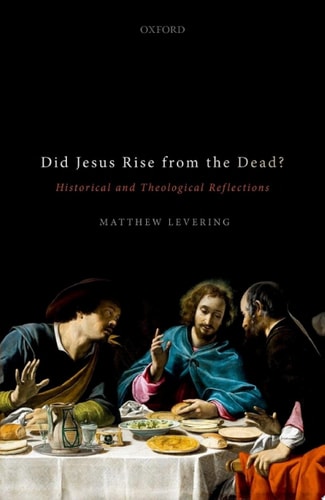
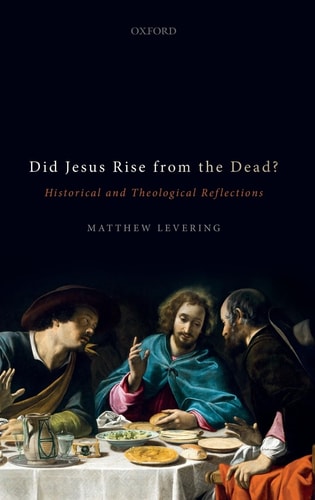
The story of Jesus of Nazareth, as recounted in the New Testament, has always been understood by the church to be historically true. It is an account of the life, death, and resurrection of a real person, whose links with history are firmly signalled in the creeds of the early church, which affirm that Jesus `suffered under Pontius Pilate'. Contemporary historical scholarship has, however, called into question the reliability of the church's version of this story, and thereby raised the question as to whether ordinary people can know its historical truth. This book argues that the historicity of the story still matters, and that its religious significance cannot be captured by the category of `non-historical myth'. The commonly drawn distinction between the Christ of faith and Jesus of history cannot be maintained. The Christ who is the object of faith must be seen as historical; the Jesus who is reconstructed by historical scholarship is always shaped by commitments of faith. A reconsideration of the Englightenment epistemologies that underlie much historical scholarship shows that historical knowledge of this story is still possible. Such knowledge can be inferential, based on historical evidence. A careful look at contemporary New Testament studies, and the philosophical and literary assumptions upon which it rests, shows that this scholarship should not undermine the confidence of lay people who believe that they can know that the church's story about Jesus is true.
Menrva's Summary
THE THESIS
This book investigates whether the historical claims of the New Testament regarding Jesus of Nazareth remain intellectually defensible in light of modern critical scholarship. C. Stephen Evans, a philosopher and theologian, challenges the rigid dichotomy between the 'Jesus of history' and the 'Christ of faith.' By critiquing the Enlightenment-era epistemological assumptions that dominate contemporary historical inquiry, he argues that historical knowledge of the incarnational narrative is both possible and inferential. The text seeks to restore confidence in the church's traditional understanding of Jesus as a real historical figure whose life, death, and resurrection are grounded in actual events.
THE SCOPE MAP
What You Will Find
- A philosophical critique of Enlightenment historiography and its impact on biblical studies.
- An analysis of the relationship between faith commitments and historical reconstruction.
- A defense of the historical reliability of the New Testament accounts.
Scope Limits
- The book does not provide a comprehensive biography of Jesus or a detailed archaeological survey of first-century Palestine.
- It does not engage in exhaustive textual criticism of individual gospel verses.
THE AUTHORITY PERSPECTIVE
Scholars and theologians frequently note the philosophical density of the prose, which requires a firm grasp of epistemology to fully appreciate. Experts highlight this work as a significant contribution to the ongoing dialogue between analytic philosophy and historical theology.
Page Count:
401
Publication Date:
1996-01-01
Publisher:
OUP Oxford
ISBN-10:
0191037273
ISBN-13:
9780191037276
Religion
Christian Theology
Biblical teaching
Jesus Christ
Apologetics
Philosophy of
Incarnation
Historical Jesus
Bibles