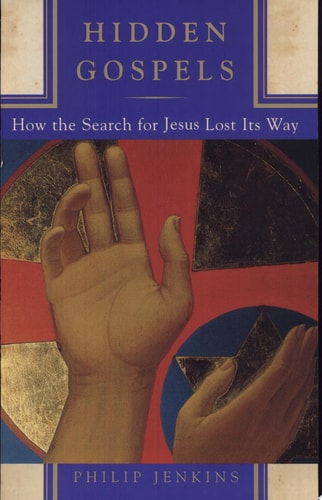
Hidden Gospels: How the Search for Jesus Lost Its Way
0
0
As an Amazon Associate and affiliate partner, Menrva Books earns from qualifying purchases. Learn more
Author Description
Was Jesus really a subversive mystic whose true teachings were suppressed by an authoritarian church? Has the real nature of Christianity been deliberately obscured for centuries? Do recently discovered texts such as the Gospel of Thomas, the Gospel of Mary, and even the Dead Sea Scrolls undermine the historical validity of the New Testament? In this incisive critique, Philip Jenkins thoroughly and convincingly debunks such claims. Jenkins places the recent controversies surrounding the hidden gospels in a broad historical context and argues that, far from being revolutionary, such attempts to find an alternative Christianity date back at least to the Enlightenment. And by employing the appropriate scholarly and historical methodologies, he demonstrates that the texts purported to represent pristine Christianity were in fact composed long after the canonical gospels found in the Bible. Produced by obscure heretical movements, these texts offer no reliable new information about Jesus or the early church. They have attracted so much media attention chiefly because they seem to support radical, feminist, and post-modern positions in the modern church. Indeed, Jenkins shows how best-selling books on the "hidden gospels" have been taken up by an uncritical, scandal-hungry media as the basis for a social movement that could have dramatic effects on the faith and practice of contemporary Christianity. Brilliantly researched and sharply argued, Hidden Gospels unearths both the complex agendas and flawed methods of scholars who have created a whole new mythology about Jesus and the early church.
Menrva's Summary
THE THESIS
This book investigates whether the recent surge in interest regarding non-canonical gospels and alternative Christian histories is supported by rigorous historical evidence or driven by modern ideological agendas. Philip Jenkins, a distinguished historian and scholar of religious studies, utilizes his extensive background in church history to evaluate the claims surrounding texts like the Gospel of Thomas and the Gospel of Mary. He argues that these documents are frequently misrepresented by contemporary authors to serve radical or post-modern interests, rather than providing genuine insight into the historical Jesus or the origins of the early church.
THE SCOPE MAP
What You Will Find
- A historical analysis of the origins and dating of non-canonical gospels compared to the New Testament canon.
- A critique of the methodologies employed by popular authors who promote alternative Christian narratives.
- Examination of the influence of Enlightenment-era thought on modern attempts to reconstruct early Christianity.
- Case studies on how media outlets and contemporary social movements utilize historical revisionism to influence modern religious practice.
THE AUTHORITY PERSPECTIVE
Scholars and readers frequently note the book's sharp, critical tone and its effectiveness in providing a historical counter-narrative to popular sensationalist literature. Experts highlight this as a necessary resource for those seeking to understand the academic consensus regarding the formation of the biblical canon and the nature of early heretical movements.
Page Count:
271
Publication Date:
2002-01-01
Publisher:
Oxford University Press
ISBN-10:
0199923914
ISBN-13:
9780199923915
Religion
History
Theology
Ancient History
Bibles
Christianity
Christianity origin
Apologetics
Jesus Christ
Community Tags
Similar Books