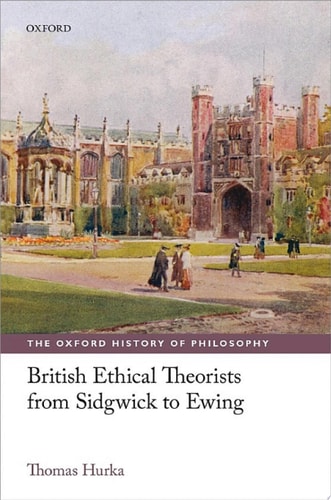
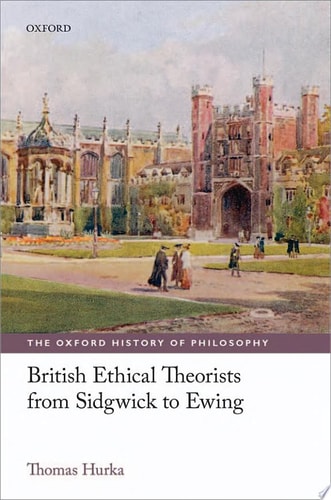
British Ethical Theorists from Sidgwick to Ewing
0
0
As an Amazon Associate and affiliate partner, Menrva Books earns from qualifying purchases. Learn more
Author Description
Thomas Hurka presents the first full historical study of an important strand in the development of modern moral philosophy. His subject is a series of British ethical theorists from the late nineteenth century to the mid-twentieth century, who shared key assumptions that made them a unified and distinctive school. The best-known of them are Henry Sidgwick, G. E. Moore, and W. D. Ross; others include Hastings Rashdall, H. A. Prichard, C. D. Broad, and A. C. Ewing. They disagreed on some important topics, especially in normative ethics. Thus some were consequentialists and others deontologists: Sidgwick thought only pleasure is good while others emphasized perfectionist goods such as knowledge, aesthetic appreciation, and virtue. But all were non-naturalists and intuitionists in metaethics, holding that moral judgements can be objectively true, have a distinctive subject-matter, and are known by direct insight. They also had similar views about how ethical theory should proceed and what are relevant arguments in it; their disagreements therefore took place on common ground. Hurka recovers the history of this under-appreciated group by showing what its members thought, how they influenced each other, and how their ideas changed through time. He also identifies the shared assumptions that made their school unified and distinctive, and assesses their contributions critically, both when they debated each other and when they agreed. One of his themes is that that their general approach to ethics was more fruitful philosophically than many better-known ones of both earlier and later times.
Menrva's Summary
THE THESIS
This work investigates the historical development and shared philosophical framework of a specific school of British ethical theorists active between the late nineteenth and mid-twentieth centuries. Thomas Hurka, a scholar of moral philosophy, examines the intellectual lineage connecting thinkers such as Henry Sidgwick, G. E. Moore, and W. D. Ross. By analyzing their metaethical commitments to non-naturalism and intuitionism, Hurka argues that this group maintained a cohesive methodology despite significant disagreements regarding normative ethics and the nature of the good.
THE SCOPE MAP
What You Will Find
- Historical analysis of British moral philosophy from the late 1800s to the mid-1900s.
- Examination of the transition from consequentialist views to perfectionist theories.
- Comparative study of metaethical intuitionism and non-naturalist moral realism.
Scope Limits
- The text does not provide a comprehensive history of all British philosophy, focusing exclusively on this specific school of ethical theorists.
- It does not address contemporary developments in moral philosophy beyond the mid-twentieth century.
THE AUTHORITY PERSPECTIVE
Experts recognize this volume as a significant contribution to the history of analytic philosophy, particularly for its recovery of an under-studied intellectual tradition. Readers frequently note the academic density of the prose, which requires a foundational understanding of ethical theory to fully grasp the nuances of the arguments presented.
Page Count:
324
Publication Date:
2014-01-01
Publisher:
OUP Oxford
ISBN-10:
0191038547
ISBN-13:
9780191038549
Philosophy
History & Surveys
Philosophy history
Ethics
Moral Philosophy
British Philosophy
Community Tags
Other Editions(4)
Similar Books


Reader Comments
Share Your Thoughts
No comments yet. Be the first to share your thoughts!