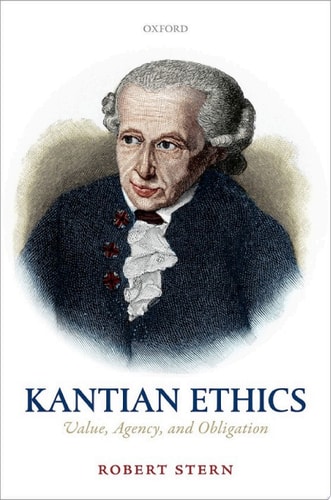
Kantian Ethics: Value, Agency, and Obligation
0
0
As an Amazon Associate and affiliate partner, Menrva Books earns from qualifying purchases. Learn more
Author Description
This volume presents a selection of Robert Stern's work on the theme of Kantian ethics. It begins by focusing on the relation between Kant's account of obligation and his view of autonomy, arguing that this leaves room for Kant to be a realist about value. Stern then considers where this places Kant in relation to the question of moral scepticism, and in relation to the principle of 'ought implies can', and examines this principle in its own right. The papers then move beyond Kant himself to his wider influence and to critics of his work, including Hegel, the British Idealists, and the Danish philosopher and theologian K. E. Løgstrup, while also offering a comparison with William James's arguments for freedom. The collection concludes with a consideration of a broadly Kantian critique of divine command ethics offered by Stephen Darwall, arguing that the critique does not succeed. General themes considered in this volume therefore include value, perfectionism, agency, autonomy, moral motivation, moral scepticism, and obligation, as well as the historical place of Kant's ethics and its influence on thinkers up to the present day.
Menrva's Summary
THE THESIS
This volume investigates the coherence of Kantian ethics by examining the intersection of moral obligation, human agency, and the realism of value. Robert Stern, a scholar of Kantian and post-Kantian philosophy, compiles a series of essays that analyze the structural foundations of Kant's moral framework. The text argues that Kant's account of autonomy does not preclude a realist interpretation of value, while simultaneously addressing the logical implications of the 'ought implies can' principle.
THE SCOPE MAP
What You Will Find
- Analysis of the relationship between autonomy and moral obligation
- Critical examination of the 'ought implies can' principle
- Comparative studies involving Hegel, British Idealists, K. E. Løgstrup, and William James
- Rebuttal of Stephen Darwall's critique of divine command ethics
Scope Limits
- The text does not provide a comprehensive introduction to Kant's entire philosophical system
- It focuses primarily on specific thematic debates rather than a chronological survey of Kant's life
THE AUTHORITY PERSPECTIVE
Scholars and students of moral philosophy frequently identify this collection as a rigorous resource for understanding the nuances of Kantian agency and its historical reception. Experts highlight the text's utility in bridging the gap between classical Kantian thought and subsequent critiques by idealist and existentialist thinkers.
Page Count:
294
Publication Date:
2015-01-01
Publisher:
OUP Oxford
ISBN-10:
0191033669
ISBN-13:
9780191033667
Philosophy
Philosophy history
Ethics Modern
Ethics
Metaphysics
Kant
History & Surveys
Moral Philosophy
Community Tags
Similar Books