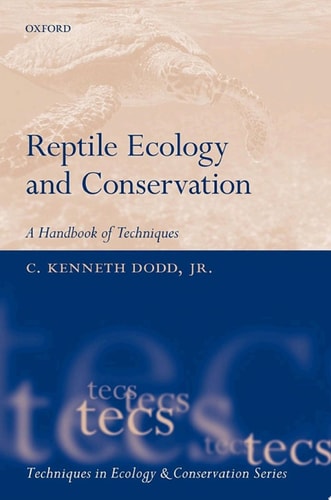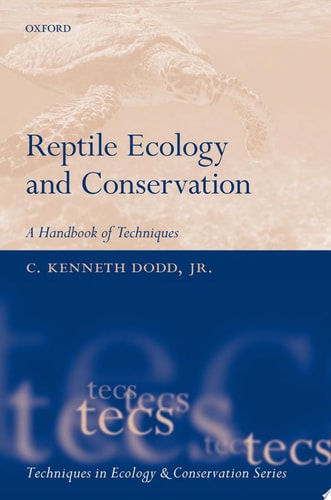
Reptile Ecology and Conservation
0
0
As an Amazon Associate and affiliate partner, Menrva Books earns from qualifying purchases. Learn more
Author Description
This Practical Handbook Of Reptile Field Ecology And Conservation Brings Together A Distinguished, International Group Of Reptile Researchers To Provide A State-of-the-art Review Of The Many New And Exciting Techniques Used To Study Reptiles. The Authors Describe Ecological Sampling Techniques And How They Are Implemented To Monitor The Conservation Status And Population Trends Of Snakes, Lizards, Tuatara, Turtles, And Crocodilians Throughout The World. Emphasis Is Placed On The Extent Of Statistical Inference And The Biases Associated With Different Techniques And Analyses. The Chapters Focus On The Application Of Field Research And Data Analysis For Achieving An Understanding Of Reptile Life History, Population Dynamics, Movement Patterns, Thermal Ecology, Conservation Status, And The Relationship Between Reptiles And Their Environment. The Book Emphasises The Need For Thorough Planning, And Demonstrates How A Multi-dimensional Approach Incorporates Information Related To Morphology, Genetics, Molecular Biology, Epidemiology, Statistical Modelling, Animal Welfare, And Biosecurity. Although Accentuating Field Sampling, Sections On Experimental Applications In Laboratories And Zoos, Thermal Ecology, Genetics, Landscape Ecology, Disease And Biosecurity, And Management Options Are Included. Much Of This Information Is Scattered In The Scientific Literature Or Not Readily Available, And The Intention Is To Provide An Affordable, Comprehensive Synthesis For Use By Graduate Students, Researchers, And Practising Conservationists Worldwide.
Menrva's Summary
THE THESIS
This handbook investigates the methodological challenges and technical requirements for conducting rigorous field research and conservation monitoring of reptile populations globally. C. Kenneth Dodd Jr. compiles contributions from an international cohort of experts to establish a standardized framework for ecological sampling. The text argues that effective conservation depends on the integration of statistical modeling, molecular biology, and precise field techniques to accurately assess population trends and environmental interactions.
THE SCOPE MAP
What You Will Find
- Methodologies for monitoring snakes, lizards, tuatara, turtles, and crocodilians
- Statistical inference techniques and analysis of sampling biases
- Integration of morphology, genetics, and epidemiology in field studies
- Guidelines for experimental applications in laboratory and zoo settings
Scope Limits
- Does not provide exhaustive species-specific identification guides
- Does not cover historical evolutionary biology outside of current conservation applications
THE AUTHORITY PERSPECTIVE
Experts recognize this volume as a comprehensive technical resource for graduate students and field biologists. Readers frequently note the high density of the prose and the practical utility of the multi-dimensional research frameworks presented.
Page Count:
512
Publication Date:
2016-01-01
Publisher:
Oxford University Press
ISBN-10:
0191039063
ISBN-13:
9780191039065
Science
Ecology
Herpetology
Conservation Biology
Zoology
Reference
Community Tags
Similar Books