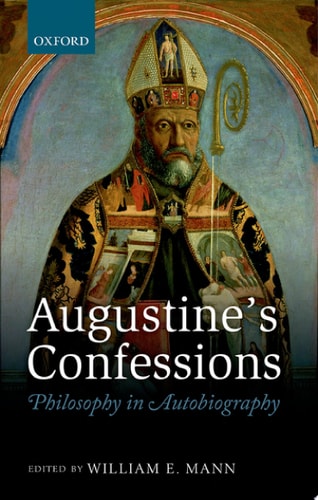
Augustine's Confessions: Philosophy in Autobiography
0
0
As an Amazon Associate and affiliate partner, Menrva Books earns from qualifying purchases. Learn more
Author Description
Augustine's Confessions is a masterpiece of world literature. Written by Augustine in his forties, at the height of his philosophical and rhetorical skills, the Confessions is at once autobiographical, philosophical, theological, and psychological. The aim of the eight essays commissioned for the present volume is to provide an examination and discussion of some of the philosophical issues raised by Augustine. What constitutes the happy or blessed life and what is required to achieve it? The essays question the role that philosophical perplexity plays in the search for truth, and the mental discipline that is required for conducting the search; in addition to asking how Augustine depicts the acquisition of truth as a vision of God. Furthermore, they discuss the problems that arise in the attempt to understand minds, both our own and others, and ask about the interplay between what reason tells us is right and what we will to do. What are the impediments to an individual's moral progress, and how far are these impediments created by the temptations to indulge in such fictions as dramas and dreams? What is the nature of eternity, and how does eternity differ from time? How should scripture be interpreted, especially the account of creation of the material world in Genesis? Readers with a basic knowledge of Augustine may perceive him to be simply a powerful definer and defender of religious orthodoxy, a figure who ranks behind only Jesus and Paul in the development of a distinctively Christian world-view. For such readers the intellectual honesty and psychological candour of the Confessions should come as a pleasant surprise.
Menrva's Summary
THE THESIS
This volume investigates the philosophical dimensions and intellectual rigor embedded within Augustine's autobiographical work, the Confessions. Edited by William E. Mann, this collection of eight essays utilizes the primary text of the Confessions to analyze Augustine's inquiries into truth, morality, and the nature of time. The contributors examine how Augustine bridges the gap between personal narrative and rigorous philosophical inquiry, challenging the perception of him as merely a defender of religious orthodoxy.
THE SCOPE MAP
What You Will Find
- Analysis of the concept of the happy or blessed life
- Examination of the role of philosophical perplexity in the search for truth
- Discussions on the nature of eternity versus time
- Interpretations of the creation account in Genesis
- Exploration of the interplay between reason and human will
Scope Limits
- Does not provide a comprehensive biography of Augustine
- Does not serve as a general introduction to Christian theology
THE AUTHORITY PERSPECTIVE
Scholars and students of philosophy often utilize this text to move beyond the theological reputation of Augustine and engage with his psychological and logical arguments. Readers frequently note that the essays provide a necessary bridge for those seeking to understand the intellectual honesty present in his writing.
Page Count:
256
Publication Date:
2014-01-01
Publisher:
OUP Oxford
ISBN-10:
0191030619
ISBN-13:
9780191030611
Autobiography
Philosophy
Religion
Theology
Literary Criticism
History of Ideas
History & Surveys
Christian philosophy
Community Tags
Similar Books