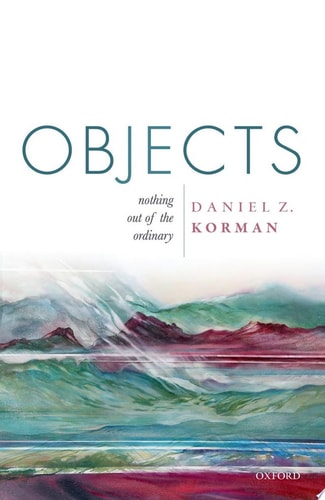
Objects
0
0
As an Amazon Associate and affiliate partner, Menrva Books earns from qualifying purchases. Learn more
Author Description
What Sorts Of Material Objects Are There? Many Philosophers Opt For Surprising Answers To This Question That Seem Deeply At Odds With How We Ordinarily Think About The Material World. Some Embrace Radically Eliminative Views, On Which There Are Far Fewer Objects Than We Ordinarily Take There To Be, While Others Go In For Radically Permissive Views On Which There Are Legions Of Extraordinary Objects That Somehow Escape Our Notice, Despite Being Highly Visible And Right Before Our Eyes. In This Book, Daniel Z. Korman Defends Our Ordinary, Intuitive Judgments About Which Objects There Are. The Book Responds To A Wide Variety Of Arguments That Have Driven People Away From The Intuitive View: Arbitrariness Arguments, Debunking Arguments, Overdetermination Arguments, Arguments From Vagueness And Material Constitution, And The Problem Of The Many. It Also Criticizes Attempts To Show That Permissive And Eliminative Views Are, Despite Appearances, Entirely Compatible With Our Ordinary Beliefs And Intuitions.
Menrva's Summary
THE THESIS
What criteria determine the existence of material objects, and can our common-sense intuitions be defended against radical metaphysical skepticism? Daniel Z. Korman, a philosopher specializing in metaphysics, evaluates the tension between ordinary beliefs about material objects and the counterintuitive conclusions reached by contemporary philosophers. He argues for a conservative, common-sense ontology, systematically dismantling arguments that suggest we are either surrounded by far fewer objects than we believe or by a vast, hidden multitude of arbitrary entities.
THE SCOPE MAP
What You Will Find
- Analysis of the 'Problem of the Many' and arguments from vagueness.
- Evaluation of eliminative versus permissive ontological frameworks.
- Rebuttal of arguments concerning material constitution and overdetermination.
- Critique of attempts to reconcile radical metaphysical theories with ordinary language.
Scope Limits
- The text does not address non-material or abstract objects outside the scope of physical ontology.
- It does not provide a comprehensive history of metaphysics, focusing instead on contemporary analytic debates.
THE AUTHORITY PERSPECTIVE
Experts recognize this work as a significant contribution to the debate on material objects, particularly for its rigorous defense of common-sense realism. Readers frequently note the technical density of the prose, which is best suited for those with a background in analytic metaphysics.
Page Count:
256
Publication Date:
2015-01-01
Publisher:
Oxford University Press
ISBN-10:
0191046442
ISBN-13:
9780191046445
Philosophy
Metaphysics
Ontology
Community Tags
Other Editions(2)

Similar Books