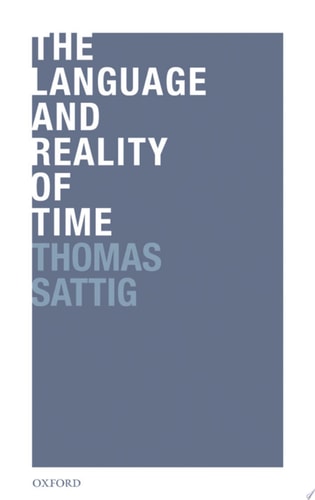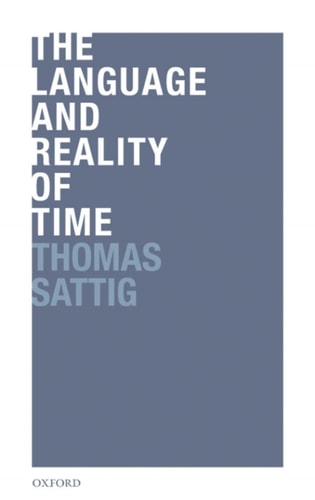
The Language and Reality of Time
0
0
As an Amazon Associate and affiliate partner, Menrva Books earns from qualifying purchases. Learn more
Author Description
Thomas Sattig's book develops a comprehensive framework for doing philosophy of time. He brings together a variety of different perspectives, linking our ordinary conception of time with the physicist's conception, and linking questions about time addressed in metaphysics with questions addressed in the philosophy of language. Within this framework, Sattig explores the temporal dimension of the material world in relation to the temporal dimension of our ordinary discourse about the world. The discussion is centred around the dispute between three-dimensionalists and four-dimensionalists about whether the temporal profile of ordinary objects mirrors their spatial profile. Are ordinary objects extended in time in the same way in which they are extended in space? Do they have temporal as well as spatial parts? Four-dimensionalists say 'yes', three-dimensionalists say 'no'. Sattig develops an original three-dimensionalist picture of the material world, and argues that this picture is preferable to its four-dimensionalists rivals if ordinary thought and talk are taken seriously. Among the issues that Sattig discusses are the metaphysics of persistence, change, composition, location, coincidence, and relativity; the ontology of past, present, and future; and the semantics of predication, tense, temporal modifiers, and sortal terms.
Menrva's Summary
THE THESIS
This book investigates the relationship between our ordinary conception of time and the scientific and metaphysical frameworks used to describe it. Thomas Sattig, a philosopher specializing in metaphysics, constructs a unified framework that bridges the gap between linguistic discourse and physical reality. By evaluating the dispute between three-dimensionalists and four-dimensionalists, he argues for a specific three-dimensionalist perspective that aligns with common human experience and language.
THE SCOPE MAP
What You Will Find
- A detailed analysis of the metaphysics of persistence, change, and composition.
- A comparative study of three-dimensionalist and four-dimensionalist ontologies.
- An examination of the semantics of tense, predication, and temporal modifiers.
- Discussions on the implications of relativity for material objects.
Scope Limits
- The text does not provide a general introduction to philosophy for laypeople.
- It does not offer a comprehensive history of temporal physics beyond its relevance to the metaphysical debate.
THE AUTHORITY PERSPECTIVE
Experts recognize this work as a rigorous contribution to contemporary analytic metaphysics and the philosophy of language. Readers frequently note the academic density of the prose, which requires a strong background in formal logic and metaphysical terminology to fully grasp the arguments presented.
Page Count:
240
Publication Date:
2006-01-01
Publisher:
Clarendon Press
ISBN-10:
0191535486
ISBN-13:
9780191535482
Philosophy
Physics
Philosophy of
Time
Metaphysics
Ontology