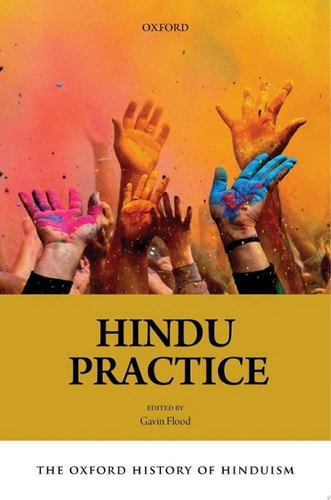
The Oxford History of Hinduism: Hindu Practice
0
0
As an Amazon Associate and affiliate partner, Menrva Books earns from qualifying purchases. Learn more
Author Description
Traditions of asceticism, yoga, and devotion (bhakti), including dance and music, developed in Hinduism over long periods of time. Some of these practices, notably those denoted by the term yoga, are orientated towards salvation from the cycle of reincarnation and go back several thousand years. These practices, borne witness to in ancient texts called Upaniṣads, as well as in other traditions, notably early Buddhism and Jainism, are the subject of this volume in the Oxford History of Hinduism. Practices of meditation are also linked to asceticism (tapas) and its institutional articulation in renunciation (saṃnyăsa). There is a range of practices or disciplines from ascetic fasting to taking a vow (vrata) for a deity in return for a favour. There are also devotional practices that might involve ritual, making an offering to a deity and receiving a blessing, dancing, or visualization of the master (guru). The overall theme—the history of religious practices—might even be seen as being within a broader intellectual trajectory of cultural history. In the substantial introduction by the editor this broad history is sketched, paying particular attention to what we might call the medieval period (post-Gupta) through to modernity when traditions had significantly developed in relation to each other. The chapters in the book chart the history of Hindu practice, paying particular attention to indigenous terms and recognizing indigenous distinctions such as between the ritual life of the householder and the renouncer seeking liberation, between 'inner' practices of and 'external' practices of ritual, and between those desirous of liberation (mumukṣu) and those desirous of pleasure and worldly success (bubhukṣu). This whole range of meditative and devotional practices that have developed in the history of Hinduism are represented in this book.
Menrva's Summary
THE THESIS
This volume investigates the historical development and institutionalization of diverse religious practices within Hinduism, ranging from ancient asceticism to modern devotional traditions. Editor Gavin Flood, a prominent scholar of Hindu traditions, curates a collection of essays that analyze how these practices evolved across centuries. The work argues that Hindu practice is best understood through indigenous distinctions, such as the dichotomy between the householder and the renouncer, rather than through external Western frameworks.
THE SCOPE MAP
What You Will Find
- Historical analysis of yoga, asceticism (tapas), and renunciation (saṃnyăsa).
- Examination of devotional (bhakti) traditions, including ritual, music, and dance.
- Exploration of the distinction between those seeking liberation (mumukṣu) and those seeking worldly success (bubhukṣu).
- Scholarly overview of the post-Gupta medieval period through to contemporary modernity.
Scope Limits
- The text focuses primarily on the history of religious practice rather than a comprehensive theological survey of all Hindu schools of thought.
- It does not attempt to provide a singular, unified definition of Hinduism, but rather maps the diversity of its lived traditions.
THE AUTHORITY PERSPECTIVE
Scholars and students of religious studies frequently cite this volume as a rigorous, academic resource for understanding the complexities of Hindu ritual life. Experts highlight the editor's introduction as a foundational text for navigating the historical trajectory of these diverse practices.
Page Count:
512
Publication Date:
2020-01-01
Publisher:
OUP Oxford
ISBN-10:
0191053236
ISBN-13:
9780191053238
History
Religion
Philosophy
Cultural History
Hinduism
Community Tags
Similar Books