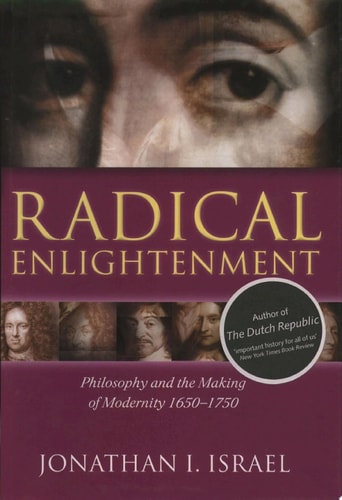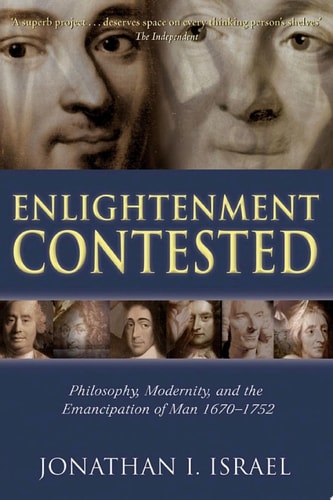
Enlightenment Contested: Philosophy, Modernity, and the Emancipation of Man 1670-1752
0
0
As an Amazon Associate and affiliate partner, Menrva Books earns from qualifying purchases. Learn more
Author Description
Jonathan Israel presents the first major reassessment of the Western Enlightenment for a generation. Continuing the story he began in the best-selling Radical Enlightenment, and now focusing his attention on the first half of the eighteenth century, he returns to the original sources to offer a groundbreaking new perspective on the nature and development of the most important currents in modern thought. Israel traces many of the core principles of Western modernity to their roots in the social, political, and philosophical ferment of this period: the primacy of reason, democracy, racial equality, feminism, religious toleration, sexual emancipation, and freedom of expression. He emphasizes the dual character of the Enlightenment, and the bitter struggle between on the one hand a generally dominant, anti-democratic mainstream, supporting the monarchy, aristocracy, and ecclesiastical authority, and on the other a largely repressed democratic, republican, and 'materialist' radical fringe. He also contends that the supposedly separate French, British, German, Dutch, and Italian enlightenments interacted to such a degree that their study in isolation gives a hopelessly distorted picture. A work of dazzling and highly accessible scholarship, Enlightenment Contested will be the definitive reference point for historians, philosophers, and anyone engaged with this fascinating period of human development.
Menrva's Summary
THE THESIS
This work investigates the intellectual origins of Western modernity by examining the ideological conflict between mainstream and radical currents during the early eighteenth century. Prof. Jonathan I. Israel, a historian of early modern Europe, utilizes extensive primary source analysis to challenge traditional interpretations of the Enlightenment. He argues that the period was defined by a fundamental struggle between a conservative, anti-democratic mainstream and a repressed, materialist radical fringe that championed democracy and equality. By synthesizing intellectual developments across multiple European nations, Israel demonstrates that the Enlightenment was a unified, transnational phenomenon rather than a collection of isolated national movements.
THE SCOPE MAP
What You Will Find
- Analysis of philosophical and political discourse from 1670 to 1752
- Examination of the interaction between French, British, Dutch, German, and Italian intellectual currents
- Exploration of the roots of modern principles including secularism, democracy, and human rights
Scope Limits
- The study focuses primarily on the first half of the eighteenth century
- The narrative prioritizes high-level intellectual and political history over social or economic history
THE AUTHORITY PERSPECTIVE
Scholars and historians frequently cite this work as a foundational text for understanding the radical roots of modern democratic thought. Readers often note the significant academic density of the prose, which requires a high level of familiarity with early modern philosophical debates.
Page Count:
1028
Publication Date:
2006-01-01
Publisher:
OUP Oxford
ISBN-10:
0191057487
ISBN-13:
9780191057489
Philosophy
History
Enlightenment
History & Surveys
Intellectual History
European History
Community Tags
Similar Books