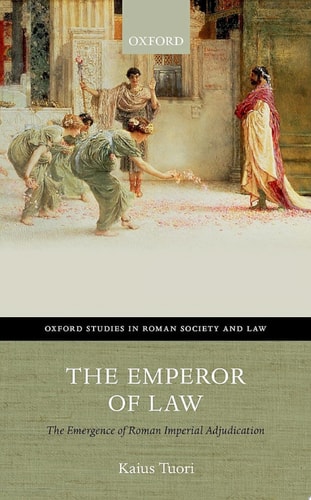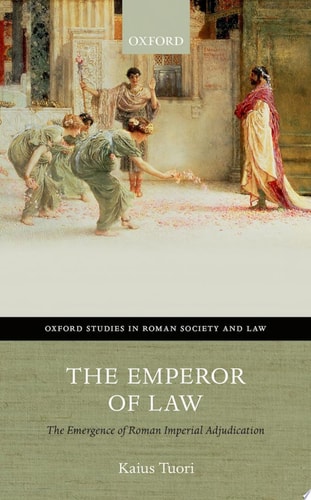
The Emperor of Law
0
0
As an Amazon Associate and affiliate partner, Menrva Books earns from qualifying purchases. Learn more
Author Description
In The Days Of The Roman Empire, The Emperor Was Considered Not Only The Ruler Of The State, But Also Its Supreme Legal Authority, Fulfilling The Multiple Roles Of Supreme Court, Legislator, And Administrator. The Emperor Of Law Explores How The Emperor Came To Assume The Mantle Of A Judge, Beginning With Augustus, The First Emperor, And Spanning The Years Leading Up To Caracalla And The Severan Dynasty. While Earlier Studies Have Attempted To Explain This Change Either Through Legislation Or Behaviour, This Volume Undertakes A Novel Analysis Of The Gradual Expansion And Elaboration Of The Emperor's Adjudication And Jurisdiction: By Analysing The Process Through Historical Narratives, It Argues That The Emergence Of Imperial Adjudication Was A Discourse That Involved Not Only The Emperors, But Also Petitioners Who Sought Their Rulings, Lawyers Who Aided Them, The Senatorial Elite, And The Roman Historians And Commentators Who Described It. Stories Of Emperors Settling Lawsuits And Demonstrating Their Power Through Law, Including Those Depicting 'mad' Emperors Engaging In Violent Repressions, Played An Important Part In Creating A Shared Conviction That The Emperor Was Indeed The Supreme Judge Alongside The Empirical Shift In The Legal And Political Dynamic. Imperial Adjudication Reflected Equally The Growth Of Imperial Power During The Principate And The Centrality Of The Emperor In Public Life, And Constitutional Legitimation Was Thus Created Through The Examples Of Previous Actions - Examples That Historical Authors Did Much To Shape. Aimed At Readers Of Classics, Roman Law, And Ancient History, The Emperor Of Law Offers A Fundamental Reinterpretation Of The Much Debated Problem Of The Advent Of Imperial Supremacy In Law That Illuminates The Importance Of Narrative Studies To The Field Of Legal History.
Menrva's Summary
THE THESIS
How did the Roman Emperor transition from a political ruler to the supreme legal authority of the state? Kaius Tuori, a scholar of Roman law and history, examines the evolution of imperial adjudication from the reign of Augustus through the Severan dynasty. By moving beyond traditional legislative analysis, Tuori argues that the emperor's role as a judge was constructed through a complex discourse involving petitioners, legal professionals, the senatorial elite, and historical narrators who codified these actions into a shared cultural expectation of imperial power.
THE SCOPE MAP
What You Will Find
- Analysis of the Principate era legal and political dynamics.
- Examination of historical narratives and anecdotes regarding imperial judicial interventions.
- Investigation into the interplay between petitioners, lawyers, and the imperial office.
Scope Limits
- The study focuses primarily on the period from Augustus to the Severan dynasty and does not cover the later Byzantine legal developments.
THE AUTHORITY PERSPECTIVE
Scholars in the field of legal history identify this work as a significant contribution to understanding the intersection of narrative studies and Roman jurisprudence. Readers frequently note the academic density of the prose, which is tailored for specialists in classics and ancient history.
Page Count:
424
Publication Date:
2016-01-01
Publisher:
Oxford University Press
ISBN-10:
0191061891
ISBN-13:
9780191061899
History
Classics
Ancient History
Roman law
Legal History
Community Tags
Similar Books