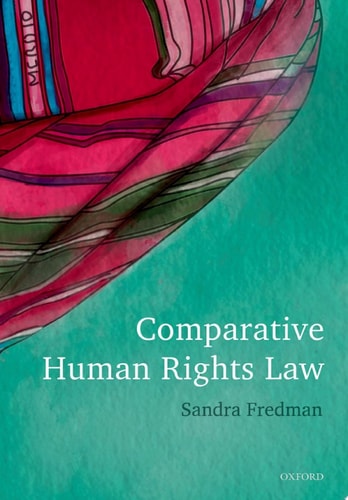
Comparative Human Rights Law
0
0
As an Amazon Associate and affiliate partner, Menrva Books earns from qualifying purchases. Learn more
Author Description
Courts in different jurisdictions face similar human rights questions. Does the death penalty breach human rights? Does freedom of speech include racist speech? Is there a right to health? This book uses the prism of comparative law to examine the fascinating ways in which these difficult questions are decided. On the one hand, the shared language of human rights suggests that there should be similar solutions to comparable problems. On the other hand, there are important differences. Constitutional texts are worded differently; courts have differing relationships with the legislature; and there are divergences in socio-economic development, politics, and history. Nevertheless, there is a growing transnational conversation between courts, with cases in one jurisdiction being cited in others. Part I sets out the cross-cutting themes which shape the ways judges respond to challenging human rights issues. It examines when it is legitimate to refer to foreign materials; how universality and cultural relativity are balanced in human rights law; the appropriate role of courts in adjudicating human rights in a democracy; and the principles judges use to interpret human rights texts. The book is unusual in transcending the distinction between socio-economic rights and civil and political rights. Part II applies these cross-cutting themes to comparing human rights law in the US, UK, South Africa, Canada, and India. Its focus is on seven particularly challenging issues: the death penalty, abortion, housing, health, speech, education and religion, with the aim of inspiring further comparative examination of other pressing human rights issues.
Menrva's Summary
THE THESIS
This book investigates how courts across diverse jurisdictions navigate shared human rights dilemmas despite varying constitutional, political, and historical frameworks. Sandra Fredman, a distinguished scholar in human rights and labor law, utilizes a comparative legal framework to analyze how transnational judicial conversations influence the interpretation of rights. The text argues that while human rights language is universal, the application of these rights is deeply contingent upon local democratic structures and socio-economic contexts.
THE SCOPE MAP
What You Will Find
- Comparative analysis of human rights jurisprudence in the US, UK, South Africa, Canada, and India
- Examination of cross-cutting themes including judicial legitimacy, cultural relativity, and interpretive principles
- Analysis of seven specific rights issues: death penalty, abortion, housing, health, speech, education, and religion
Scope Limits
- Does not provide an exhaustive survey of every global jurisdiction
- Does not offer a singular prescriptive solution for human rights adjudication
THE AUTHORITY PERSPECTIVE
Legal scholars and practitioners recognize this work as a significant contribution to the field of comparative constitutional law. Readers frequently note the academic rigor of the prose and the author's ability to bridge the gap between civil-political rights and socio-economic rights.
Page Count:
512
Publication Date:
2018-01-01
Publisher:
OUP Oxford
ISBN-10:
0191003808
ISBN-13:
9780191003806
Constitutional Law
Comparative Law
Law
Professional Career & Trade
Human rights
Community Tags
Similar Books