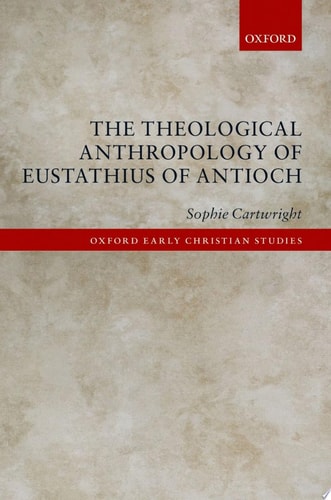
The Theological Anthropology of Eustathius of Antioch
0
0
As an Amazon Associate and affiliate partner, Menrva Books earns from qualifying purchases. Learn more
Author Description
This Authoritative Study Explores Eustathius Of Antioch's Theological Anthropology, Offering Insight Into One Of The Most Important Thinkers Of The Early Arian Controversy. Sophie Cartwright Situates Eustathius' Thought In Relation To The Early 'arian' Controversy, The Constaninian Revolution, The Theological Legacies Of Irenaeus And Origen, And The Philosophical Commentary Tradition. She Also Locates Eustathius Within His Historical Context And Provides A Detailed Overview Of The Sources For His Complex And Fragmented Corpus. Eustathius' Anthropology Is Indebted To A Tradition Shaped By The Theology Of Irenaeus, That Had Already Come Into Conversation With Origen. Dr Cartwright Suggests That Origen's Own Thought Was Indebted To Irenaeus But That He Had A Radically Different Cosmology; This Shaped Subsequent Engagement With Both Thinkers. Eustathius' Theology Of Embodiment Draws On Irenaeus, In Opposition To What He Perceives As The Origenist And Platonist Anthropology Which, In His Anti-arian Works, He Associates With Eusebius Of Caesarea. However, He Is Deeply Indebted To Origen For His Doctrine Of Christ's Human Soul And, Consequently, His Wider Psychology. He Places Humanity At A Great Distance From God And Seeks To Give Humanity Autonomous Value, Especially In His Discourse On God's Image. This Represents One Logical Negotiation Of The Rejection Of Origen's Eternal Intelligible World. Eustathius' Divisive Christology Offers A Picture Of Christ As The Perfect Human Being That Echoes Irenaeus' Adam-christ Typology, Fleshed Out By An Origenian Discourse On Christ's Human Soul And Infused With A Keen Awareness Of The Chasm Between God And Humankind. He Proffers A Doctrine Of Inherited Sinfulness As An Alternative To Origen's Doctrine Of The Fall And Looks To A Corporeal Eschatological Kingdom Ruled Over By The Human Christ; This Eschatology Probably Reflects Discomfiture With Constantine's Role In The Church.
Menrva's Summary
THE THESIS
This study investigates the theological anthropology of Eustathius of Antioch to clarify his position within the early Arian controversy and his complex intellectual relationship with Irenaeus and Origen. Dr. Sophie Cartwright, a specialist in patristic thought, utilizes a rigorous analysis of Eustathius' fragmented corpus to reconstruct his views on embodiment, human autonomy, and Christology. By situating Eustathius within the Constantinian era, the author argues that his work represents a deliberate negotiation between inherited theological traditions and the specific philosophical challenges posed by his contemporaries.
THE SCOPE MAP
What You Will Find
- Analysis of the theological legacy of Irenaeus and Origen on fourth-century thought.
- Examination of Eustathius' critique of Eusebius of Caesarea.
- Detailed exploration of the doctrine of Christ's human soul and its implications for human psychology.
- Discussion of the Adam-Christ typology and its role in Eustathian eschatology.
Scope Limits
- The study is limited by the fragmented nature of the primary source material available for Eustathius.
- It does not provide a comprehensive biography of Eustathius beyond his theological contributions.
THE AUTHORITY PERSPECTIVE
Scholars recognize this work as a significant contribution to the study of the Arian controversy and the development of early Christian anthropology. Readers frequently note the academic density of the prose, which serves as a foundational resource for students and researchers of patristic theology.
Page Count:
280
Publication Date:
2015-01-01
Publisher:
Oup Oxford
ISBN-10:
0191061999
ISBN-13:
9780191061998
Philosophy
Patristics
Church History
Christian Anthropology
Theology
Community Tags
Other Editions(3)
Similar Books


Reader Comments
Share Your Thoughts
No comments yet. Be the first to share your thoughts!