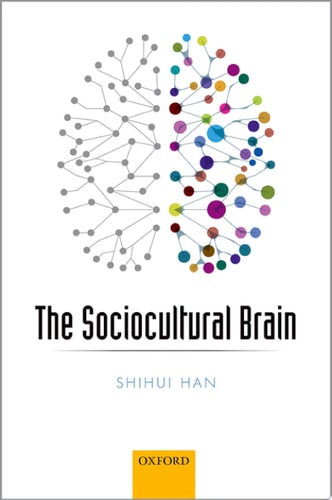
The Sociocultural Brain
0
0
As an Amazon Associate and affiliate partner, Menrva Books earns from qualifying purchases. Learn more
Author Description
How Is The Human Brain Shaped By Our Sociocultural Experiences? What Neural Correlates Underlie The Extraordinary Cultural Diversity Of Human Behavior? How Do Our Genes Interact With Sociocultural Experiences To Moderate Human Brain Functional Organization And Behavior? This Sociocultural Brain Provides A New Perspective On Human Brain Functional Organization, Highlighting The Role Of Human Sociocultural Experience And Its Interaction With Genes In Shaping Human Brain And Behavior. Drawing On Cutting Edge Research From The Burgeoning Field Of Cultural Neuroscience, It Reveals The Cross-cultural Differences In Human Brain Activity That Underlye A Multitude Of Cognitive And Affective Processes - Including Visual Perception/attention, Memory, Causal Attribution, Inference Of Others’ Mental States, Self-reflection, And Empathy. In Addition, It Presents Studies That Integrate Brain Imaging And Cultural Priming To Explore The Causal Relationship Between Culture And Brain Functional Organization. The Book Ends With A Discussion Of The Implications Of Cultural Neuroscience Findings For Understanding The Nature Of Human Brain And Culture, As Well As The Implications For Education, Cross-cultural Communication And Conflict, And The Clinical Treatment Of Mental Disorders.
Menrva's Summary
THE THESIS
How do sociocultural experiences and genetic factors interact to shape the functional organization of the human brain? Shihui Han, a prominent researcher in cultural neuroscience, synthesizes empirical evidence to argue that human brain activity is not uniform but is significantly modulated by cultural contexts. The text establishes a framework for understanding how cognitive and affective processes—such as self-reflection, empathy, and visual perception—are influenced by the interplay between biological predispositions and environmental cultural inputs.
THE SCOPE MAP
What You Will Find
- Research findings from the field of cultural neuroscience regarding cross-cultural brain activity.
- Integration of brain imaging techniques with cultural priming methodologies.
- Analysis of cognitive processes including memory, causal attribution, and mental state inference.
- Discussion on the practical applications of these findings in education, conflict resolution, and clinical psychology.
Scope Limits
- The text does not provide an exhaustive survey of every cultural group globally.
- It does not offer a comprehensive clinical manual for treating specific mental disorders.
THE AUTHORITY PERSPECTIVE
Experts recognize this work as a significant synthesis of the burgeoning field of cultural neuroscience. Readers frequently note the academic density of the prose, which is best suited for students and researchers familiar with neuroimaging and psychological theory.
Page Count:
288
Publication Date:
2017-01-01
Publisher:
Oxford University Press
ISBN-10:
0191060917
ISBN-13:
9780191060915
Psychology
Sociology
Neuroscience
Community Tags
Similar Books