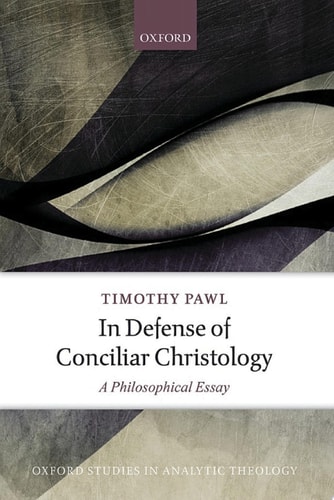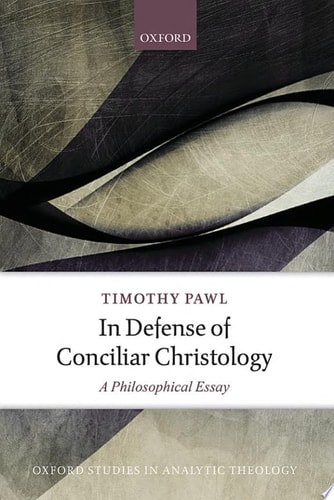
In Defense of Conciliar Christology
0
0
As an Amazon Associate and affiliate partner, Menrva Books earns from qualifying purchases. Learn more
Author Description
This Work Presents A Historically Informed, Systematic Exposition Of The Christology Of The First Seven Ecumenical Councils Of Undivided Christendom, From The First Council Of Nicaea In 325 Ad To The Second Council Of Nicaea In 787 Ad. Assuming The Truth Of Conciliar Christology For The Sake Of Argument, Timothy Pawl Considers Whether There Are Good Philosophical Arguments That Show A Contradiction Or Incoherence In That Doctrine. He Presents The Definitions Of Important Terms In The Debate And A Helpful Metaphysics For Understanding The Incarnation. In Defense Of Conciliar Christology Discusses Three Types Of Philosophical Objections To Conciliar Christology. Firstly, It Highlights The Fundamental Philosophical Problem Facing Christologyâhow Can One Thing Be Both God And Man, When Anything Deserving To Be Called God Must Have Certain Attributes, And Yet It Seems That Nothing That Can Aptly Be Called Man Can Have Those Same Attributes? It Then Considers The Argument That If The Second Person Of The Holy Trinity Were Immutable Or Atemporal, As Conciliar Christology Requires, Then That Person Could Not Become Anything, And Thus Could Not Become Man. Finally, Pawl Addresses The Objection That If There Is A Single Christ Then There Is A Single Nature Or Will In Christ. However, If That Conditional Is True, Then Conciliar Christology Is False, Since It Affirms The Antecedent Of The Conditional To Be True, But Denies The Truth Of The Consequent. Pawl Defends Conciliar Christology Against These Charges, Arguing That All Three Philosophical Objections Fail To Show Conciliar Christology Inconsistent Or Incoherent.
Menrva's Summary
THE THESIS
This work investigates whether the Christological doctrines established by the first seven ecumenical councils contain inherent logical contradictions or philosophical incoherence. Timothy Pawl, a philosopher specializing in analytic theology, utilizes the framework of contemporary analytic metaphysics to evaluate the consistency of these historical dogmas. By assuming the truth of conciliar Christology, the author systematically addresses and refutes three primary philosophical objections regarding the nature of the Incarnation, divine attributes, and the unity of Christ.
THE SCOPE MAP
What You Will Find
- A systematic exposition of Christological definitions from the First Council of Nicaea (325 AD) to the Second Council of Nicaea (787 AD).
- An application of analytic metaphysics to the concepts of divine immutability, atemporality, and the union of natures.
- A structured defense against objections concerning the compatibility of divine and human attributes within a single person.
Scope Limits
- The text does not provide a historical narrative of the councils themselves, focusing instead on the logical consistency of their output.
- It does not attempt to prove the truth of the doctrines, but rather defends their internal coherence.
THE AUTHORITY PERSPECTIVE
Scholars and theologians frequently note the technical rigor and clarity of Pawl's application of analytic philosophy to traditional dogma. Experts highlight this as a significant contribution to the field of analytic theology, particularly for its ability to bridge the gap between historical conciliar definitions and modern logical analysis.
Page Count:
288
Publication Date:
2016-01-01
Publisher:
Oxford University Press
ISBN-10:
0191078476
ISBN-13:
9780191078477
Philosophy
Theology
Metaphysics
Christology
Christian Theology
Community Tags
Similar Books