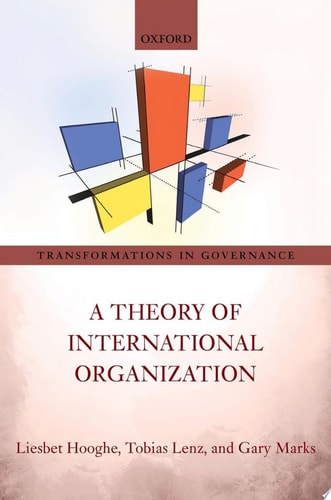
A Theory of International Organization
0
0
As an Amazon Associate and affiliate partner, Menrva Books earns from qualifying purchases. Learn more
Author Description
Why do international organizations (IOs) look so different, yet so similar? The possibilities are diverse. Some international organizations have just a few member states, while others span the globe. Some are targeted at a specific problem, while others have policy portfolios as broad as national states. Some are run almost entirely by their member states, while others have independent courts, secretariats, and parliaments. Variation among international organizations appears as wide as that among states. This book explains the design and development of international organization in the postwar period. It theorizes that the basic set up of an IO responds to two forces: the functional impetus to tackle problems that spill beyond national borders and a desire for self-rule that can dampen cooperation where transnational community is thin. The book reveals both the causal power of functionalist pressures and the extent to which nationalism constrains the willingness of member states to engage in incomplete contracting. The implications of postfunctionalist theory for an IO's membership, policy portfolio, contractual specificity, and authoritative competences are tested using annual data for 76 IOs for 1950-2010.
Menrva's Summary
THE THESIS
This book investigates the structural variation of international organizations (IOs) by proposing a postfunctionalist theory to explain why these entities differ in scope, membership, and authority. The authors, Gary Marks, Tobias Lenz, and Liesbet Hooghe, utilize a framework that balances functional pressures—the need to address transnational problems—against the constraints of nationalism and the desire for self-rule. By analyzing the tension between these two forces, the text provides a systematic explanation for the design and development of IOs in the post-World War II era.
THE SCOPE MAP
What You Will Find
- A postfunctionalist theoretical framework for institutional design.
- Analysis of IO membership, policy portfolios, and contractual specificity.
- Empirical testing using annual data for 76 international organizations from 1950 to 2010.
Scope Limits
- The analysis is restricted to the postwar period and does not cover pre-1950 institutional history.
- The study focuses primarily on structural design rather than the day-to-day operational outcomes of these organizations.
THE AUTHORITY PERSPECTIVE
Experts recognize this work as a significant contribution to the study of multilevel governance and international institutional design. Readers frequently note the academic density of the prose, which is tailored for scholars and students of political science and international relations.
Page Count:
240
Publication Date:
2019-01-01
Publisher:
Oxford University Press
ISBN-10:
0191079618
ISBN-13:
9780191079610
Governance
Academic
Public Policy
International relations