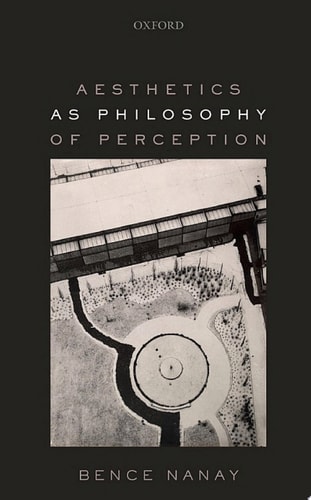
Aesthetics as Philosophy of Perception
0
0
As an Amazon Associate and affiliate partner, Menrva Books earns from qualifying purchases. Learn more
Author Description
Aesthetics is about some special and unusual ways of experiencing the world. Not just artworks, but also nature and ordinary objects. But then if we apply the remarkably elaborate and sophisticated conceptual apparatus of philosophy of perception to questions in aesthetics, we can make real progress. The aim of this book is to bring the discussion of aesthetics and perception together. Bence Nanay explores how many influential debates in aesthetics look very different, and may be easier to tackle, if we clarify the assumptions they make about perception and about experiences in general. The focus of Aesthetics as Philosophy of Perception is the concept of attention and the ways in which this concept and especially the distinction between distributed and focused attention can help us re-evaluate various key concepts and debates in aesthetics. Sometimes our attention is distributed in an unusual way: we are attending to one perceptual object but our attention is distributed across its various properties. This way of experiencing the world is special and it plays an important role in characterizing a number of phenomena associated with aesthetics. Some of these that the book talks about include picture perception and depiction, aesthetic experiences, formalism, the importance of uniqueness in aesthetics, and the history of vision debate. But sometimes, in some aesthetic contexts, our attention is not at all distributed, but very much focused. Nanay closes his argument with an analysis of some paradigmatic aesthetic phenomena where our attention is focused: identification and engagement with fictional characters. And the conflict and interplay between distributed and focused attention is an important feature of many artworks.
Menrva's Summary
THE THESIS
This book investigates how the conceptual framework of the philosophy of perception can resolve long-standing debates within the field of aesthetics. Bence Nanay, a professor of philosophy and researcher in the philosophy of perception, utilizes cognitive science and perceptual theory to argue that aesthetic experiences are fundamentally tied to specific modes of attention. By distinguishing between distributed and focused attention, the author provides a new lens through which to evaluate traditional aesthetic problems.
THE SCOPE MAP
What You Will Find
- Analysis of the distinction between distributed and focused attention in perceptual experience
- Application of perceptual theory to picture perception and depiction
- Re-evaluation of formalism and the importance of uniqueness in art
- Examination of the history of vision debate
Scope Limits
- The text does not provide a comprehensive history of aesthetic philosophy
- The analysis is limited to the intersection of perception and aesthetics rather than broader sociological or cultural art history
THE AUTHORITY PERSPECTIVE
Experts in the field recognize this work as a significant contribution to the intersection of cognitive science and aesthetics. Readers frequently note the academic density of the prose, which requires a foundational understanding of contemporary philosophy of perception to fully grasp the author's arguments.
Page Count:
226
Publication Date:
2016-01-01
Publisher:
OUP Oxford
ISBN-10:
0191077445
ISBN-13:
9780191077449
Philosophy
Aesthetics
Art Theory
Perception philosophy
Community Tags
Other Editions(4)

Similar Books


Reader Comments
Share Your Thoughts
No comments yet. Be the first to share your thoughts!