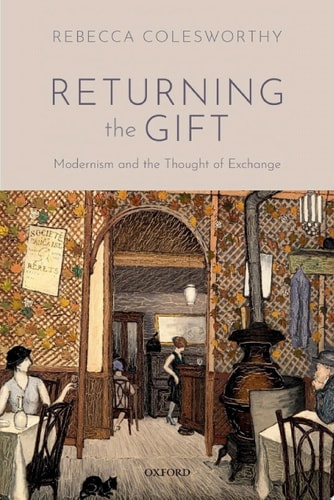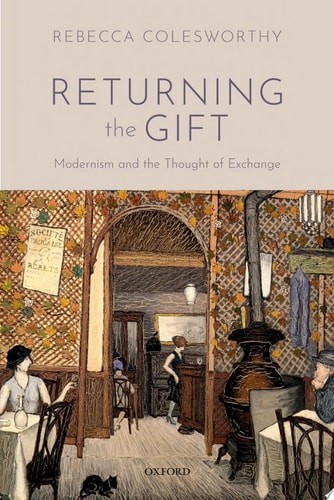
Returning the Gift
0
0
As an Amazon Associate and affiliate partner, Menrva Books earns from qualifying purchases. Learn more
Author Description
From Debates About Reparations To The Rise Of The Welfare State, The Decades Following World War I Saw A Widespread Turn Across Disciplines To Questions About The Nature And Role Of Gifts: What Is A Gift? What Do Gifts Mean And Do? Which Individuals And Institutions Have The Authority To Give? Marshalling Wide-ranging Interdisciplinary Research, Returning The Gift Argues That These Questions Centrally Shaped Literary Modernism. The Book Begins By Revisiting The Locus Classicus Of Twentieth-century Gift Theory — The French Sociologist Marcel Mauss's 1925 Essay, The Gift: The Form And Reason For Exchange In Archaic Societies. His Title Notwithstanding, The Gift Mauss Envisions Is Not Primitive Or Pre-capitalist, But Rather A Distinctively Modern Phenomenon. Subsequent Chapters Offer Sustained, Nuanced Readings Of Novels And Nonfiction By Virginia Woolf, Jean Rhys, Gertrude Stein, And H.d. From The 1920s To 1940s, Underscoring The Ways Their Writing Is Illuminated By Contemporaneous Developments In The Social Sciences, Economics, And Politics, While Also Making A Case For Their Unique Contributions To Broader Debates About Gifts. Not Only Do These Writers Insist That Literature Is A Special Kind Of Gift, But They Also Pose Challenges To The Gift's Feminization In The Work Of Both Their Victorian Forebears And Contemporary Male Theorists. Each Of These Writers Uses Tropes And Narratives Of Giving — Of Hospitality, Sympathy, Reciprocity, Charity, Genius, And Kinship — To Imagine More Egalitarian Social Possibilities Under The Conditions Of The Capitalist Present. The Language Of The Gift Is Not, As We Might Expect, A Mark Of Hostility To The Market So Much As A Means Of Giving Form To The 'society' In Market Society — Of Representing Everyday Experiences Of Exchange That The Myth Of The Free Market Works, Even Now, To Render Unthinkable.
Menrva's Summary
THE THESIS
This book investigates how the concept of the gift, as a social and economic mechanism, fundamentally shaped the development of literary modernism in the early twentieth century. Author Rebecca Colesworthy, a scholar of modern literature and theory, synthesizes interdisciplinary research from sociology, economics, and political history to argue that the gift is a distinctively modern phenomenon rather than a primitive relic. By examining the works of Virginia Woolf, Jean Rhys, Gertrude Stein, and H.D., she demonstrates how these writers utilized the language of exchange to critique capitalist structures and imagine more egalitarian social possibilities.
THE SCOPE MAP
What You Will Find
- A re-evaluation of Marcel Mauss’s 1925 essay, The Gift, within a modern context.
- Analysis of literary tropes including hospitality, sympathy, reciprocity, charity, and kinship.
- Comparative studies of novels and nonfiction texts published between the 1920s and 1940s.
Scope Limits
- The analysis is primarily focused on the specific literary contributions of four female modernists.
- The text does not provide an exhaustive history of gift-giving practices across all global cultures.
THE AUTHORITY PERSPECTIVE
Scholars and critics recognize this work as a rigorous contribution to modernist studies that successfully bridges the gap between literary analysis and social theory. Readers frequently note the academic density of the prose, which is well-suited for researchers and students interested in the intersection of economics and literature.
Page Count:
320
Publication Date:
2018-01-01
Publisher:
Oxford University Press
ISBN-10:
0191084344
ISBN-13:
9780191084348
Economics
Literary Criticism
Modernism
Social Theory
Gender Studies
Cultural History
Community Tags
Similar Books