Fictions of Credit in the Age of Shakespeare
0
0
As an Amazon Associate and affiliate partner, Menrva Books earns from qualifying purchases. Learn more
Author Description
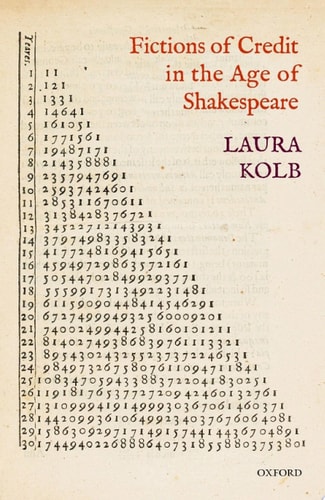
In Shakespeare's England, credit was synonymous with reputation, and reputation developed in the interplay of language, conduct, and social interpretation. As a consequence, artful language and social hermeneutics became practical, profitable skills. Since most people both used credit and extended it, the dual strategies of implication and inference--of producing and reading evidence--were everywhere. Like poetry or drama, credit was constructed: fashioned out of the interplay of artifice and interpretation. The rhetorical dimension of economic relations produced social fictions on a range of scales: from transitory performances facilitating local transactions to the long-term project of maintaining creditworthiness to the generalized social indeterminacy that arose from the interplay of performance and interpretation. Fictions of Credit in the Age of Shakespeare examines how Shakespeare and his contemporaries represented credit-driven artifice and interpretation on the early modern stage. It also analyses a range of practical texts--including commercial arithmetics, letter-writing manuals, legal formularies, and tables of interest--which offered strategies for generating credit and managing debt. Looking at plays and practical texts together, Fictions of Credit argues that both types of writing constitute “equipment for living”: practical texts by offering concrete strategies for navigating England's culture of credit, and plays by exploring the limits of credit's dangers and possibilities. In their representations of a world re-written by debt relations, dramatic texts in particular articulate a phenomenology of economic life, telling us what it feels like to live in credit culture: to live, that is, inside a fiction.
Menrva's Summary
THE THESIS
How did the early modern English concept of credit function as a social and literary construct that shaped both economic behavior and dramatic representation? Laura Kolb, an academic specializing in early modern literature, investigates the intersection of economic debt and social reputation in Shakespearean England. She argues that credit was not merely a financial mechanism but a rhetorical performance, requiring individuals to master the arts of implication and inference to navigate their social and commercial environments.
THE SCOPE MAP
What You Will Find
- Analysis of Shakespearean plays alongside practical manuals like commercial arithmetics and legal formularies.
- A framework defining credit as a form of social fiction constructed through performance and interpretation.
- Examination of the phenomenology of economic life in the sixteenth and seventeenth centuries.
Scope Limits
- The study focuses primarily on the cultural and rhetorical dimensions of credit rather than providing a comprehensive quantitative history of early modern banking or macroeconomics.
THE AUTHORITY PERSPECTIVE
Scholars in the field of early modern studies recognize this work for its interdisciplinary approach to economic history and literary analysis. Readers frequently note the academic density of the prose, which provides a rigorous examination of how debt relations influenced the period's social and artistic output.
Page Count:
233
Publication Date:
2021-01-01
Publisher:
OUP Oxford
ISBN-10:
0192603515
ISBN-13:
9780192603517
Economics
In literature
English & College Success
English
Cultural History
Literary Criticism
History - Modern
English drama
English literature
Community Tags
Similar Books