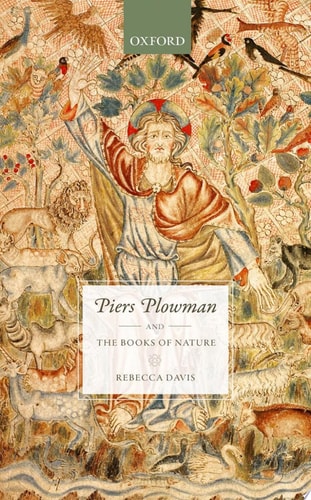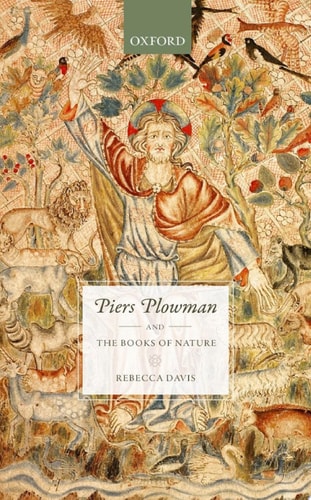
Piers Plowman and the Books of Nature
0
0
As an Amazon Associate and affiliate partner, Menrva Books earns from qualifying purchases. Learn more
Author Description
Piers Plowman and the Books of Nature explores the relationship of divine creativity, poetry, and ethics in William Langland's fourteenth-century dream vision. These concerns converge in the poem's rich vocabulary of kynde, the familiar Middle English word for nature, broadly construed. But in a remarkable coinage, Langland also uses kynde to name nature's creator, who appears as a character in Piers Plowman. The stakes of this representation could not be greater: by depicting God as Kynde, that is, under the guise of creation itself, Langland explores the capacity of nature and of language to bear the plenitude of the divine. In doing so, he advances a daring claim for the spiritual value of literary art, including his own searching form of theological poetry. This claim challenges recent critical attention to the poem's discourses of disability and failure and reveals the poem's place in a long and diverse tradition of medieval humanism that originates in the twelfth century and, indeed, points forward to celebrations of nature and natural capacity in later periods. By contextualizing Langland's poetics of kynde within contemporary literary, philosophical, legal, and theological discourses, Rebecca Davis offers a new literary history for Piers Plowman that opens up many of the poem's most perplexing interpretative problems.
Menrva's Summary
THE THESIS
This book investigates how William Langland’s fourteenth-century poem, Piers Plowman, utilizes the Middle English term 'kynde' to bridge the gap between divine creativity, ethical practice, and the inherent value of poetic language. Rebecca Davis, a scholar of medieval literature, constructs an argument that Langland’s unique personification of God as 'Kynde' serves as a theological and literary assertion of the spiritual capacity of art. By situating the poem within the broader context of medieval humanism, Davis challenges contemporary critical readings that emphasize the poem's focus on disability and failure, proposing instead a framework that highlights the poem's celebration of natural capacity.
THE SCOPE MAP
What You Will Find
- Analysis of the semantic evolution and usage of the term 'kynde' in fourteenth-century English.
- A comparative study of medieval literary, philosophical, legal, and theological discourses.
- An examination of the intersection between divine representation and poetic form.
Scope Limits
- The study focuses primarily on the theological and linguistic dimensions of the poem rather than a comprehensive biographical account of William Langland.
- The analysis does not provide a line-by-line commentary but rather a thematic and historical re-evaluation of the poem's core concepts.
THE AUTHORITY PERSPECTIVE
Scholars and students of medieval literature recognize this work as a significant contribution to the study of Langland’s poetics and the intellectual history of the fourteenth century. Experts frequently note the academic density of the prose, which provides a rigorous re-contextualization of the poem for advanced researchers in the field.
Page Count:
288
Publication Date:
2016-01-01
Publisher:
OUP Oxford
ISBN-10:
019108428X
ISBN-13:
9780191084287
Poetry
Theology
English
English & College Success
Literary Criticism
History of Ideas