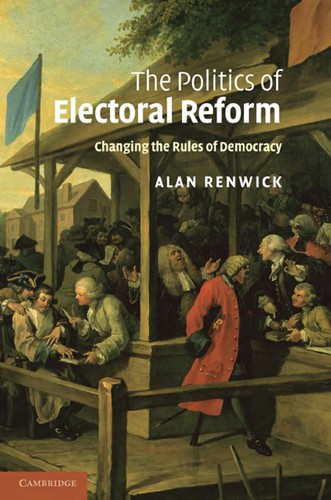
Politics of Electoral Reform
0
0
As an Amazon Associate and affiliate partner, Menrva Books earns from qualifying purchases. Learn more
Author Description
Elections lie at the heart of democracy, and this book seeks to understand how the rules governing those elections are chosen. Drawing on both broad comparisons and detailed case studies, it focuses upon the electoral rules that govern what sorts of preferences voters can express and how votes translate into seats in a legislature. Through detailed examination of electoral reform politics in four countries (France, Italy, Japan and New Zealand), Alan Renwick shows how major electoral system changes in established democracies occur through two contrasting types of reform process. Renwick rejects the simple view that electoral systems always straightforwardly reflect the interests of the politicians in power. Politicians' interests are complex; politicians are sometimes unable to pursue reforms they want; occasionally, they are forced to accept reforms they oppose. The Politics of Electoral Reform shows how voters and reform activists can have real power over electoral reform--Provided by publisher.
Menrva's Summary
THE THESIS
This book investigates the complex processes by which electoral rules, fundamental to democratic governance, are chosen and changed. Drawing on extensive comparative analysis and in-depth case studies of France, Italy, Japan, and New Zealand, Alan Renwick examines how the rules governing voter preferences and vote-to-seat translation are decided. The work challenges the simplistic notion that politicians always dictate reforms to suit their immediate interests, revealing instead a more nuanced dynamic where politicians' interests are multifaceted, and they can be both constrained and compelled by external forces. Renwick demonstrates that voters and reform activists can exert significant influence over the outcomes of electoral reform.
THE SCOPE MAP
- Analysis of electoral rules governing voter preferences and vote-to-seat translation.
- Detailed case studies of electoral reform in France, Italy, Japan, and New Zealand.
- Examination of two contrasting types of reform processes in established democracies.
- Exploration of the complex interests of politicians in electoral reform.
- Discussion of the power of voters and reform activists in shaping electoral systems.
THE AUTHORITY PERSPECTIVE
The book is recognized for its rigorous analysis of electoral reform processes in established democracies. It is noted for moving beyond simplistic explanations of political motivations, offering a more nuanced understanding of how electoral systems are changed. The detailed case studies provide concrete examples that support its theoretical arguments about the interplay of politicians' interests, voter influence, and activist power. The work is considered a significant contribution to the study of comparative politics and democratic theory.
Page Count:
0
Publication Date:
2011-01-01
ISBN-10:
1107403251
ISBN-13:
9781107403253
Politics
Non-Fiction
Democracy
Electoral Systems
Comparative Politics
Community Tags
Similar Books