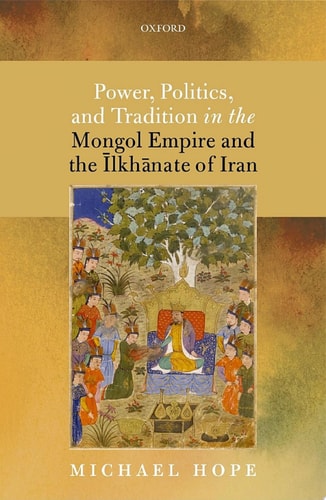
Power, Politics, and Tradition in the Mongol Empire and the Īlkhānate of Iran
0
0
As an Amazon Associate and affiliate partner, Menrva Books earns from qualifying purchases. Learn more
Author Description
This study provides a new interpretation of how political authority was conceived and transmitted in the Early Mongol Empire (1227-1259) and its successor state in the Middle East, the Īlkhānate (1258-1335). Authority within the Mongol Empire was intimately tied to the character of its founder, Chinggis Khan, whose reign served as an idealized model for the exercise of legitimate authority amongst his political successors. Yet Chinggis Khan's legacy was interpreted differently by the various factions within his army. In the years after his death, two distinct political traditions emerged within the Mongol Empire, the collegial and the patrimonialist. Each of these streams represented the economic and political interests of different groups within the Mongol Empire, respectively, the military aristocracy and the central government. The supporters of both streams claimed to adhere to the ideal of Chinggisid rule, but their different statuses within the Mongol community led them to hold divergent views of what constituted legitimate political authority. Michael Hope's study details the origin of, and the differences between, these two streams of tradition; analyzing the role that these streams played in the political development of the Mongol Empire and the Īlkhānate; and assessing the role that ideological tension between the two streams played in the events leading up to the division of the Īlkhānate. Hope demonstrates that the policy and identity of both the Early Mongol Empire and the Īlkhānate were defined by the conflict between these competing streams of Chinggisid authority.
Menrva's Summary
THE THESIS
This study investigates how competing interpretations of Chinggisid authority shaped the political development and eventual fragmentation of the Early Mongol Empire and the Īlkhānate. Michael Hope, a scholar specializing in the history of the Mongol world, utilizes primary source analysis to examine the ideological divide between collegial and patrimonialist political traditions. He argues that these two distinct streams of thought, rooted in the legacy of Chinggis Khan, represented the conflicting interests of the military aristocracy and the central government, respectively.
THE SCOPE MAP
What You Will Find
- Analysis of political authority structures from 1227 to 1335
- Comparative study of the Early Mongol Empire and the Īlkhānate
- Examination of the ideological tension between collegial and patrimonialist factions
- Assessment of how these traditions influenced the eventual division of the Īlkhānate
Scope Limits
- Does not provide a comprehensive military history of the Mongol conquests
- Focuses primarily on political ideology rather than social or cultural history
THE AUTHORITY PERSPECTIVE
Experts identify this work as a significant contribution to the study of Mongol political legitimacy and institutional development. Readers frequently note the academic density of the prose, which is intended for scholars and students of medieval Eurasian history.
Page Count:
272
Publication Date:
2016-01-01
Publisher:
OUP Oxford
ISBN-10:
0191081086
ISBN-13:
9780191081088
History
Middle Eastern
Asian History
Mongol Empire
Community Tags
Similar Books