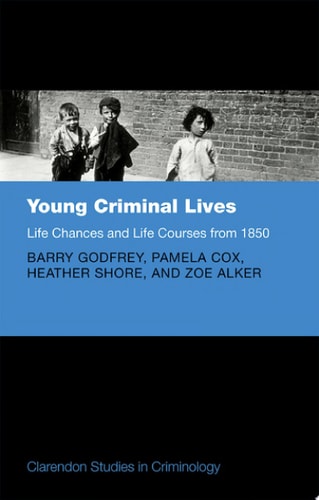
Young Criminal Lives: Life Courses and Life Chances From 1850
0
0
As an Amazon Associate and affiliate partner, Menrva Books earns from qualifying purchases. Learn more
Author Description
Young Criminal Lives Is The First Cradle-to-grave Study Of The Experiences Of Some Of The Thousands Of Delinquent, Difficult And Destitute Children Passing Through The Early English Juvenile Reformatory System. The Book Breaks New Ground In Crime Research, Speaking To Pressing Present-day Concerns Around Child Poverty And Youth Justice, And Resonating With A Powerful Public Fascination For Family History. Using Innovative Digital Methods To Unlock The Victorian Life Course, The Authors Have Reconstructed The Lives, Families And Neighbourhoods Of 500 Children Living Within, Or At The Margins Of, The Early English Juvenile Reformatory System. Four Hundred Of Them Were Sent To Reformatory And Industrial Schools In The North West Of England From Courts Around The Uk Over A Fifty-year Period From The 1860s Onwards. Young Criminal Lives Is Based On One Of The Most Comprehensive Sets Of Official And Personal Data Ever Assembled For A Historical Study Of This Kind. For The First Time, These Children Can Be Followed On Their Journey In And Out Of Reform And Then Though Their Adulthood And Old Age. The Book Centres On Institutions Celebrated In This Period For Their Pioneering New Approaches To Child Welfare And Others That Were Investigated For Cruelty And Scandal. Both Were Typical Of The New Kind Of State-certified Provision Offered, From The 1850s On, To Children Who Had Committed Criminal Acts, Or Who Were Considered 'vulnerable' To Predation, Poverty And The 'inheritance' Of Criminal Dispositions. The Notion That Interventions Can And Must Be Evaluated In Order To Determine 'what Works' Now Dominates Public Policy. But How Did Victorian And Edwardian Policy-makers And Practitioners Deal With This Question? By What Criteria, And On The Basis Of What Kinds Of Evidence, Did They Judge Their Own Successes And Failures? Young Criminal Lives Ends With A Critical Review Of The Historical Rise Of Evidence-based Policy-making Within Criminal Justice. It Will Appeal To Scholars A
Menrva's Summary
THE THESIS
This study investigates the long-term life outcomes of children processed through the Victorian and Edwardian juvenile reformatory system to determine the efficacy of early state-led intervention strategies. The authors, a team of historians and criminologists, utilize a longitudinal dataset of 500 individuals to track the trajectories of children from their initial institutionalization through their adulthood and old age. By analyzing official records alongside personal accounts, the book evaluates how historical policy-makers defined success and failure in child welfare, providing a critical perspective on the origins of modern evidence-based criminal justice policy.
THE SCOPE MAP
What You Will Find
- A longitudinal study of 500 children within the English juvenile reformatory system starting from the 1860s.
- Analysis of institutional records from reformatory and industrial schools in North West England.
- An examination of the historical development of evidence-based policy-making in criminal justice.
- Integration of digital research methods to reconstruct individual life courses and family backgrounds.
Scope Limits
- The study is geographically focused on the North West of England and specific reformatory institutions.
- It does not provide a comprehensive history of all juvenile justice systems globally during this period.
THE AUTHORITY PERSPECTIVE
Scholars and historians recognize this work as a significant contribution to the study of Victorian social policy and the history of childhood. Experts frequently highlight the rigor of the longitudinal data analysis as a model for historical research into marginalized populations.
Page Count:
256
Publication Date:
2017-01-01
Publisher:
Oxford University Press
ISBN-10:
0191092746
ISBN-13:
9780191092749
History
Social policy
Victorian Era
Sociology
Criminology
Community Tags
Other Editions(2)
Similar Books

Reader Comments
Share Your Thoughts
No comments yet. Be the first to share your thoughts!