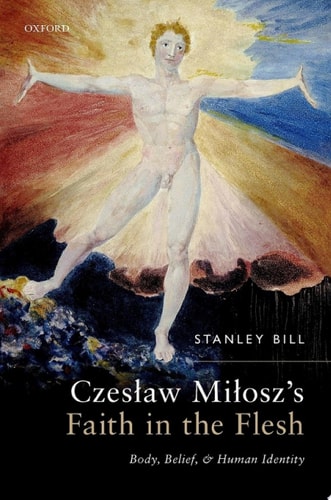
Czesław Miłosz's Faith in the Flesh: Body, Belief, and Human Identity
0
0
As an Amazon Associate and affiliate partner, Menrva Books earns from qualifying purchases. Learn more
Author Description
This book presents Czesław Miłosz's poetic philosophy of the body as an original defense of religious faith, transcendence, and the value of the human individual against what he viewed as dangerous modern forms of materialism. The Polish Nobel laureate saw the reductive "biologization" of human life as a root cause of the historical tragedies he had witnessed under Nazi German and Soviet regimes in twentieth-century Central and Eastern Europe. The book argues that his response was not merely to reconstitute spiritual or ideal forms of human identity, which no longer seemed plausible. Instead, he aimed to revalidate the flesh, elaborating his own non-reductive understandings of the self on the basis of the body's deeper meanings. Within the framework of a hesitant Christian faith, Miłosz's poetry and prose often suggest a paradoxical striving toward transcendence precisely through sensual experience. Yet his perspectives on bodily existence are not exclusively affirmative. The book traces his diverse representations of the body from dualist visions that demonize the flesh through to positive images of the body as the source of religious experience, the self, and his own creative faculty. It also examines the complex relations between "masculine" and "feminine" bodies or forms of subjectivity, as Miłosz represents them. Finally, it elucidates his contention that poetry is the best vehicle for conveying these contradictions, because it also combines "disembodied", symbolic meanings with the sensual meanings of sound and rhythm. For Miłosz, the double nature of poetic meaning reflects the fused duality of the human self.
Menrva's Summary
THE THESIS
This book investigates how Czesław Miłosz utilized the concept of the body as a philosophical and poetic framework to defend religious faith and individual identity against reductive materialism. Stanley Bill, a scholar of Polish literature, draws upon Miłosz's extensive body of poetry and prose to argue that the author sought to revalidate the flesh as a site of transcendence. By analyzing Miłosz's reactions to the historical traumas of the twentieth century, Bill demonstrates how the poet navigated the tension between spiritual belief and the physical reality of human existence.
THE SCOPE MAP
What You Will Find
- Analysis of Miłosz's poetic philosophy regarding the body and religious faith
- Examination of the impact of Nazi and Soviet ideologies on Miłosz's view of human identity
- Exploration of the duality between masculine and feminine subjectivity in his work
- Discussion of poetry as a medium for reconciling sensual and symbolic meanings
Scope Limits
- The study focuses primarily on Miłosz's literary and philosophical output rather than a comprehensive biographical account of his life
- It does not provide an exhaustive survey of all twentieth-century Polish poetry, remaining centered on Miłosz's specific thematic concerns
THE AUTHORITY PERSPECTIVE
Scholars recognize this work as a significant contribution to the study of Miłosz's intellectual development and his response to modern materialism. Readers frequently note the academic density of the prose, which provides a rigorous examination of the intersection between theology, philosophy, and poetic form.
Page Count:
214
Publication Date:
2021-01-01
Publisher:
OUP Oxford
ISBN-10:
0192658417
ISBN-13:
9780192658418
Philosophy
Biography
Religion
English
Literary Criticism
English & College Success
European History
Community Tags
Similar Books