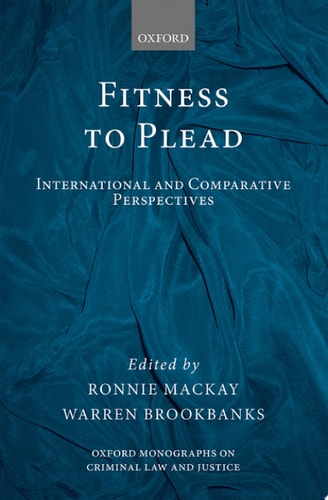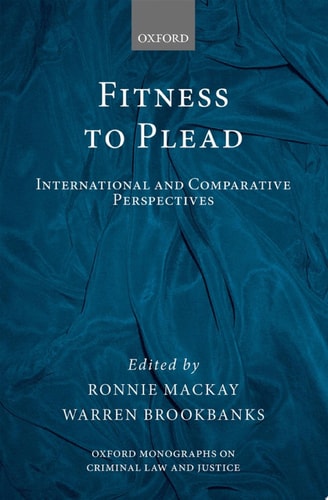
Fitness to Plead: International and Comparative Perspectives
0
0
As an Amazon Associate and affiliate partner, Menrva Books earns from qualifying purchases. Learn more
Author Description
The law relating to fitness to plead is an increasingly important area of the criminal law. While criminalization may be justified whenever an offender commits a sufficiently serious moral wrong requiring that he or she be called to account, the doctrine of fitness to plead calls this principle into question in the case of a person who lacks the capacity or ability to participate meaningfully in a criminal trial. In light of the emerging focus on capacity-based approaches to decision-making and the international human rights requirement that the law should treat defendants fairly, this volume offers a benchmark for the theory and practice of fitness to plead, providing readers with a unique opportunity to consider differing perspectives and debate on the future development and direction of a doctrine which has up till now been under-discussed and under-researched. The fitness to plead rules stand as an exception to notions of public accountability for criminal wrongdoing yet, despite the doctrine's long-standing function in criminal procedure, it has proven complex to apply in practice and has given rise to many varied legislative models and considerable litigation in different jurisdictions. Particularly troublesome is the question of what is to be done with someone who has been found unfit to stand trial. Here the law is required to balance the need to protect those defendants who are unable to participate effectively in their own trial, whether permanently or for a defined period, and the need to protect the public from people who may have caused serious social harm as a result of their antisocial behaviour. The challenge for law reformers, legislators, and judges, is to create rules that ensure that everyone who can properly be tried is tried, while seeking to preserve confidence in the fairness of the legal system by ensuring that people who cannot properly engage in the criminal trial process are not forced to endure it.
Menrva's Summary
THE THESIS
This volume investigates the complex legal doctrine of fitness to plead, questioning how criminal justice systems balance the moral necessity of accountability with the human rights requirement to protect defendants who lack the capacity to participate in their own trials. Authors Ronnie Mackay and Warren Brookbanks, both established scholars in criminal law and mental health, synthesize international legislative models and case law to provide a comprehensive framework for understanding how different jurisdictions manage defendants unable to engage meaningfully in the trial process.
THE SCOPE MAP
What You Will Find
- Comparative analysis of fitness to plead rules across multiple international jurisdictions
- Examination of the intersection between human rights law and criminal procedure
- Discussion of the tension between public safety and the rights of incapacitated defendants
Scope Limits
- Does not provide a singular, universal legislative solution for all jurisdictions
- Does not focus on the clinical diagnosis of mental disorders, but rather the legal application of capacity-based standards
THE AUTHORITY PERSPECTIVE
Legal scholars and practitioners identify this work as a significant contribution to an under-researched area of criminal procedure. Experts highlight the text as a foundational resource for those seeking to understand the evolving international standards regarding defendant capacity and fair trial rights.
Page Count:
349
Publication Date:
2018-01-01
Publisher:
OUP Oxford
ISBN-10:
0191092711
ISBN-13:
9780191092718
Professional Career & Trade
Forensic Psychology
Human rights
Comparative Law
Criminal Law
Law
Legal Theory
Community Tags
Similar Books