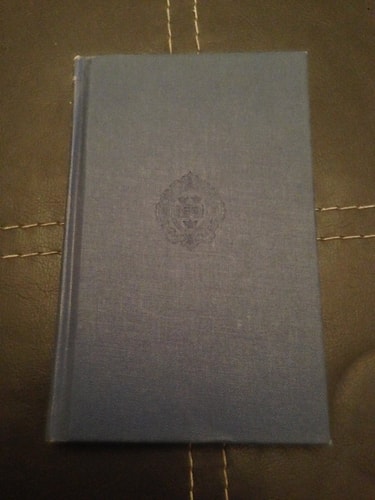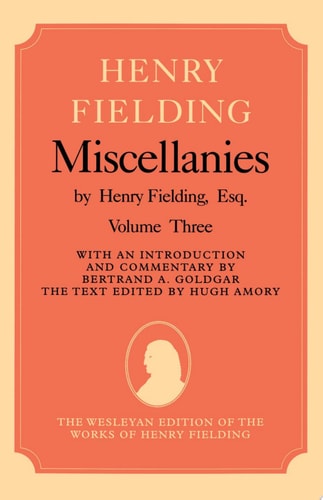
Miscellanies: Volume Three
0
0
As an Amazon Associate and affiliate partner, Menrva Books earns from qualifying purchases. Learn more
Author Description
Volume Three of Henry Fielding's Miscellanies, first published as a three-volume set in 1743, consists in its entirety of a major work of fiction, The history of the Life of the Late Mr. Jonathan Wild the Great. Jonathan Wild takes its title from the `thief-taker' and gang-leader of that name who was hanged in 1725, but in Fielding's hands, the history of Wild is transformed into a mock-hostorical work of sustained irony aimed at all who would be `great men'.The general introduction to this edition sets the novel against its historical and biographical background and argues against the view, common since the mid-nineteenth century, that it is a personal satire directed at the figure of Sir Robert Walpole. In both the general and the textual introductions, the editors also offer a fresh view on questions about the date and history of the work's composition. Full explanatory notes and commentary place Fielding's allusions and details in their contemporary context.As in previous volumes of the Weslyan Edition, this provides critical, unmodernized text, based on the Greg-Bowers `Rationale of Copy-text'. The version is that of the first edition, with an appendix giving all variants in wording and presentation in the 1754 revision. In his introduction the textual editor lays out the rationale for his choice of version. This volume also includes, for the first time in modern edition, Fielding's list of subscribers to the Miscellanies, along with detailed biographical notes and an analysis of the subscription list by the textual editor.
Menrva's Summary
THE PULSE
The narrative follows the rise and fall of Jonathan Wild, a notorious criminal whose life serves as a biting critique of societal definitions of greatness. Fielding employs a mock-heroic framework to chart Wild's trajectory from a petty thief to a powerful gang leader. The protagonist operates within a world defined by corruption and moral ambiguity, where the distinction between a criminal and a statesman is intentionally blurred. Through a third-person ironic perspective, the author exposes the hypocrisy of those who seek power at the expense of others. The narrative functions as a sustained exercise in irony, challenging the reader to reconsider the nature of virtue and ambition.
INSIDE THE PAGES
- Mock-heroic narrative structure
- Sustained use of irony and satire
- Exploration of the concept of greatness
- Social commentary on 18th-century political figures
- Third-person omniscient perspective
- Historical grounding in the life of a real criminal
- Critical apparatus including textual introductions
- Inclusion of original subscriber lists and biographical notes
THE COLLECTIVE ECHO
Readers and critics frequently highlight the sharp, unrelenting irony that defines Fielding's prose throughout the work. Discussion often centers on the author's ability to maintain a consistent satirical tone while navigating the complex moral landscape of the protagonist's life. Many observers note that the text serves as a foundational example of 18th-century social critique, effectively dismantling the romanticized notions of power prevalent in the era. The scholarly additions in this edition provide significant context for those interested in the textual history and the specific political allusions embedded within the narrative.
Page Count:
416
Publication Date:
1997-10-30
Publisher:
Clarendon Press
ISBN-10:
0198182759
ISBN-13:
9780198182757
Historical Fiction
Satire
18th century
Classic Literature
Community Tags
Similar Books