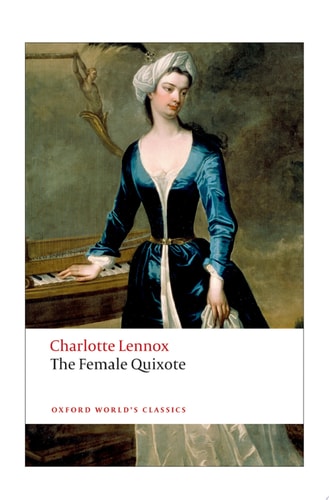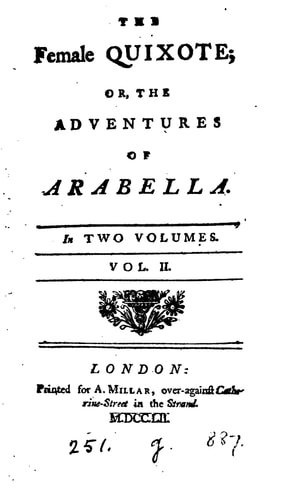
The Female Quixote: Or, the Adventures of Arabella
0
0
As an Amazon Associate and affiliate partner, Menrva Books earns from qualifying purchases. Learn more
Author Description
"The Female Quixote" (1752), a vivacious and ironical novel parodying the style of Cervantes, portrays the beautiful and aristocratic Arabella, whose passion for reading romances leads her into all manner of misunderstandings. Praised by Fielding, Richardson and Samuel Johnson, the book quickly established Charlotte Lennox as a foremost writer of the Novel of Sentiment. With an introduction and full explanatory notes, this edition should be of particular interest to students of women's literature, and of the 18th-century novel.
Menrva's Summary
THE PULSE
The protagonist, Arabella, attempts to navigate the realities of 18th-century society through the distorted lens of the heroic romances she obsessively consumes. Arabella believes that the world operates according to the exaggerated codes of chivalry and courtly love found in her books, leading her to interpret mundane social interactions as high-stakes dramas. She faces opposition from family members and suitors who attempt to correct her misconceptions, yet she remains steadfast in her literary-inspired worldview. The narrative framework utilizes a third-person perspective to highlight the irony between Arabella's expectations and the actual social norms of her time. This conflict forces the reader to observe the tension between individual imagination and the rigid expectations of the Enlightenment era.
INSIDE THE PAGES
- Parody of Cervantes' Don Quixote
- Satirical commentary on 18th-century romance novels
- Exploration of the influence of reading on perception
- Episodic structure typical of picaresque narratives
- Focus on the Novel of Sentiment genre
- Ironical tone regarding aristocratic social codes
- Character-driven misunderstandings and social blunders
- Detailed historical context regarding gender roles
THE COLLECTIVE ECHO
Discussion often centers on the effectiveness of Lennox's parody in critiquing the popular literature of her time. Readers frequently highlight the sharp contrast between Arabella's internal fantasy world and the external reality of her social environment. Critics often note the book's significance in the development of the 18th-century novel and its influence on later writers. The pacing is generally described as deliberate, allowing for the full comedic impact of Arabella's repeated social errors to manifest. Many readers find the work to be a sophisticated examination of how media consumption shapes personal identity and social behavior.
Page Count:
452
Publication Date:
1973-04-12
Publisher:
Oxford University Press
ISBN-10:
0192811401
ISBN-13:
9780192811400
Satire
Parody
Novel of Sentiment
18th century
Classic Literature
Community Tags
Other Editions(3)
Similar Books