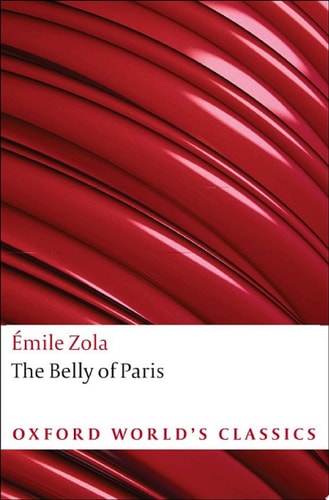
The Belly of Paris
0
0
As an Amazon Associate and affiliate partner, Menrva Books earns from qualifying purchases. Learn more
Author Description
Florent Quenu returns to Paris after being unjustly imprisoned and finds the city utterly changed. The great new food market, Les Halles, has been built, and food dominates the political and social life of the capital. The third in Zola's Rougon-Macquart series, The Belly of Paris appears in a vibrant new translation. -;'Respectable people... what bastards!' Unjustly deported to Devil's Island following Louis-Napoleon's coup-d'etat in December 1851, Florent Quenu escapes and returns to Paris. He finds the city changed beyond recognition. The old Marche des Innocents has been knocked down as part of Haussmann's grand programme of urban reconstruction to make way for Les Halles, the spectacular new food markets. Disgusted by a bourgeois society whose devotion to food is inseparable from its devotion to the government, Florent attempts an insurrection. Les Halles, apocalyptic and destructive, play an active role in Zola's picture of a world in which food and the injustice of society are inextricably linked. The Belly of Paris (Le Ventre de Paris) is the third volume in Zola's famous cycle of twenty novels, Les Rougon-Macquart. It introduces the painter Claude Lantier and in its satirical representation of the bourgeoisie and capitalism complements Zola's other great novels of social conflict and urban poverty. -
Menrva's Summary
THE PULSE
After escaping a penal colony, Florent Quenu returns to a transformed Paris only to find himself at odds with the gluttonous, politically complicit society surrounding the new Les Halles market. Florent attempts to navigate the shifting landscape of a city undergoing massive urban reconstruction under Haussmann, seeking to reconcile his past trauma with the reality of a bourgeois class obsessed with consumption. His objective to incite insurrection is constantly undermined by the physical and social weight of the market, which acts as both a provider and a corrupting force. The narrative framework utilizes Zola's signature naturalistic style, focusing on the sensory overload of the environment to mirror the moral decay of the characters.
INSIDE THE PAGES
- Detailed descriptions of the Les Halles food markets as a central, living character
- Exploration of the tension between political idealism and bourgeois complacency
- Introduction of the painter Claude Lantier as a recurring figure in the series
- Satirical commentary on the materialism of the Second French Empire
- Vivid, sensory-heavy prose focusing on the aesthetics of food and decay
- Examination of the impact of Haussmann's urban renewal on the working class
- Third-person narrative perspective providing a panoramic view of Parisian life
- Thematic focus on the intersection of physical hunger and social injustice
THE COLLECTIVE ECHO
Readers and critics frequently highlight the visceral, almost overwhelming sensory detail Zola employs to depict the market environment. Discussion often centers on the effectiveness of the market as a metaphor for the insatiable appetite of the ruling class. Many observers note the balance between the protagonist's personal struggle and the broader social critique of the era. The pacing is often described as deliberate, allowing the atmosphere of the city to build alongside the mounting tension of the plot. Readers appreciate the work for its unflinching look at the intersection of urban development and human morality.
Page Count:
320
Publication Date:
2007-01-01
Publisher:
Ebsco Publishing
ISBN-10:
019151747X
ISBN-13:
9780191517471
Historical Fiction
Paris France
French literature
Naturalism
Classic Literature
Social Realism