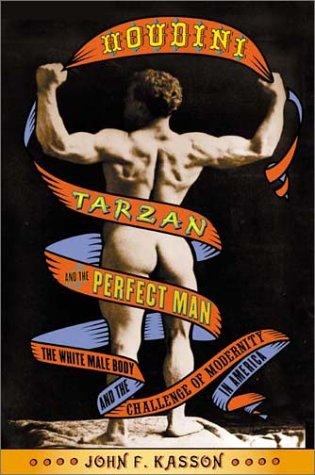
Houdini, Tarzan, and the Perfect Man
0
0
As an Amazon Associate and affiliate partner, Menrva Books earns from qualifying purchases. Learn more
Author Description
"In his new book, John F. Kasson examines the signs of crisis in American life a century ago, signs that new forces of modernity were affecting men's sense of who and what they really were. When the Prussian-born Eugen Sandow, an international vaudeville star and bodybuilder, toured the United States in the 1890s, Florenz Ziegfeld cannily presented him as the "perfect man," representing both an ancient ideal of manhood and a modern commodity extolling self-development and self-fulfillment. With Harry Houdini, the dream of escape was literally embodied in spectacular performances in which he triumphed over every kind of threat to masculine integrity - bondage, imprisonment, insanity, and death. Then, when Edgar Rice Burroughs's Tarzan swung from tree to tree and into the public eye in 1912, the fantasy of a perfect white Anglo-Saxon male was taken further, escaping the confines of civilization but reasserting its values, beating his chest and bellowing his triumph to the world. Kasson's liberally illustrated and persuasively argued study analyzes the themes linking these figures and places them in their rich historical and cultural context. Concern with the white male body - with exhibiting it and with the perils to it - suffused American culture in the years before World War I, he suggests, and continues with us today."--BOOK JACKET.
Menrva's Summary
THE THESIS
This book investigates the cultural anxieties surrounding masculinity in America at the turn of the 20th century, exploring how public figures like Eugen Sandow, Harry Houdini, and Tarzan became symbols of evolving and contested ideals of manhood. John F. Kasson, a historian, examines the impact of modernity on men's identities, using the popular figures of a bodybuilder, an escape artist, and a fictional jungle hero to illustrate broader cultural trends. The study analyzes how these men, through their performances and narratives, embodied both traditional and emerging concepts of male strength, self-mastery, and cultural dominance. Kasson places these figures within their historical and cultural context, suggesting that concerns about the white male body and its integrity were pervasive in pre-World War I America and continue to resonate today.
THE SCOPE MAP
- Analysis of Eugen Sandow as the "perfect man" and a symbol of self-development.
- Exploration of Harry Houdini's performances as embodying the triumph over threats to masculine integrity.
- Examination of Edgar Rice Burroughs's Tarzan as a fantasy of the perfect white Anglo-Saxon male.
- Discussion of the themes linking Sandow, Houdini, and Tarzan.
- Contextualization of these figures within American culture before World War I.
- Analysis of the pervasive concern with the white male body and its perceived perils.
- Connection of historical anxieties to contemporary issues of masculinity.
THE AUTHORITY PERSPECTIVE
John F. Kasson's study offers a compelling analysis of masculinity at a pivotal moment in American history, drawing connections between popular culture figures and broader societal anxieties. The book is noted for its persuasive arguments and rich historical context, examining how figures like Sandow, Houdini, and Tarzan served as cultural touchstones for evolving ideals of manhood. Its exploration of the white male body as a site of concern and display provides a framework for understanding both historical trends and their lasting impact. The work is recognized for its insightful synthesis of biography, cultural history, and the study of gender.
Page Count:
256
Publication Date:
2001-01-01
ISBN-10:
0809088622
ISBN-13:
9780809088621
Biography
Non-Fiction
History
Cultural History
American Studies
Community Tags
Similar Books