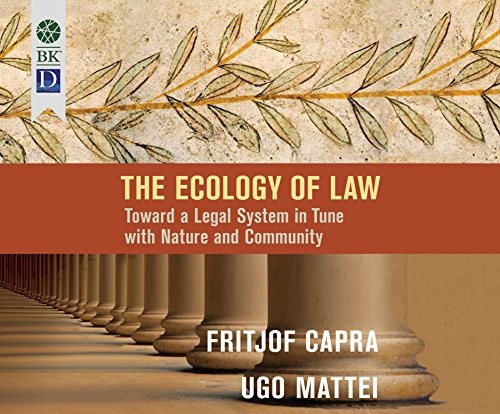
The Ecology of Law
0
0
As an Amazon Associate and affiliate partner, Menrva Books earns from qualifying purchases. Learn more
Author Description
At the root of many of the environmental, economic, and social crises we face today is a legal system based on an outdated worldview. In this groundbreaking book, bestselling author, physicist, and systems theorist Fritjof Capra and distinguished legal scholar Ugo Mattei show how, by incorporating concepts from modern science, the law can become an integral part of bringing about a better world. This is the first book to trace the fascinating parallel history of law and science from antiquity to modern times, showing how the two disciplines have always influenced each other - until recently. In the past few years, the scientific paradigm has shifted dramatically, from seeing the natural world as a kind of cosmic machine to understanding it as a network of fluidly interacting communities. But law is stuck in a mechanistic, seventeenth-century view that the world is made up of discrete individual parts. This has led to legal theory focusing on these parts and ignoring the bigger picture - for example, elevating the rights of individual property owners over the good of the community. But Capra and Mattei outline the basic concepts and structures of a legal order consistent with the ecological principles that sustain life on this planet. This is a profound and visionary reconceptualization of the very foundations of the Western legal system, with profound implications for the future of our planet.
Menrva's Summary
THE THESIS
The dominant Western legal system, rooted in a mechanistic worldview, is failing to address contemporary environmental, economic, and social crises. This book argues that law must integrate concepts from modern science, particularly systems theory and an understanding of ecological principles, to become a force for positive change. By tracing the parallel histories of law and science, the authors demonstrate how a shift from a machine-like view of the world to one of interconnected communities necessitates a reconceptualization of legal frameworks. The work proposes basic concepts and structures for a legal order that aligns with the ecological principles essential for planetary life.
THE SCOPE MAP
- Historical analysis of the intertwined development of law and science from antiquity to modern times.
- Critique of the mechanistic, seventeenth-century worldview underpinning current legal theory.
- Examination of how legal theory's focus on discrete parts, such as individual property rights, can conflict with community well-being.
- Integration of concepts from modern physics and systems theory into legal thought.
- Outline of principles for a new legal order consistent with ecological sustainability.
- Exploration of the shift in scientific understanding from a mechanical universe to a network of interacting communities.
- Implications of an ecological legal framework for the future of the planet.
THE AUTHORITY PERSPECTIVE
This work is presented as a significant reconceptualization of Western legal foundations, drawing parallels between scientific and legal history. The authors, a physicist and a legal scholar, aim to demonstrate how an outdated legal worldview contributes to global crises. The book proposes an ecological approach to law, informed by modern scientific paradigms, to foster a more sustainable future. Its reception is likely to be within academic circles focused on law, environmental studies, and systems theory, potentially sparking debate on the integration of scientific principles into legal practice.
Page Count:
0
Publication Date:
2015-01-01
ISBN-10:
1681419939
ISBN-13:
9781681419930
Philosophy
Science
Non-Fiction
Systems Theory
Law
Legal History
Ecology
Community Tags
Similar Books