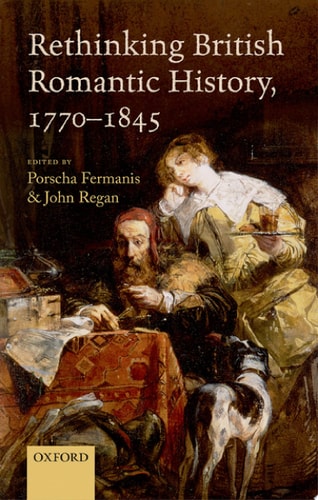
Rethinking British Romantic History, 1770-1845
0
0
As an Amazon Associate and affiliate partner, Menrva Books earns from qualifying purchases. Learn more
Author Description
Historians and literary scholars tend to agree that British intellectual culture underwent a fundamental transformation between 1770 and 1845. Yet they are unusually divided about the nature of that transformation and whether it is best understood as an epistemic rupture from, or a continuous dialogue with, the long eighteenth century. Rethinking British Romantic History, 1770-1845 rethinks the ways in which we understand the historical writing and the historical consciousness of late eighteenth- and early nineteenth-century Britain by arguing that British historicism developed largely in quasi and para-historical genres such as memoir, biography, verse, fiction, and painting, rather than in works of 'real' history. In a number of inter-related essays on changing generic forms, styles, methods, and standards, the collection demonstrates that the aesthetic developments associated with British literary 'Romanticism' not only intersected in mutually dependent ways with concurrent experiments and innovations in historical writing, but that these intersections forced an epistemological crisis-a deeply felt tension about the role of feeling and imagination in historical writing-that is still resonating in historiographical debates today. In exploring this theme, the volume also seeks to consider wider questions about the philosophy of history and literature, including questions of truth, evidence, professionalization, disciplinary strategies, and methodology. At its heart is the idea that literary texts and other artistic representations of history can have historical value, and should therefore be taken seriously by practitioners of history in all its forms.
Menrva's Summary
THE THESIS
This volume investigates whether the intellectual transformation of British culture between 1770 and 1845 represents an epistemic rupture from or a continuous dialogue with the eighteenth century. Authors John Regan and Porscha Fermanis curate a collection of essays that challenge the traditional boundaries of historical scholarship. They argue that British historicism evolved primarily through para-historical genres—such as memoir, verse, and fiction—rather than formal historical texts, thereby creating an enduring tension regarding the role of imagination in historical record-keeping.
THE SCOPE MAP
What You Will Find
- Analysis of historical consciousness in late eighteenth and early nineteenth-century Britain
- Examination of generic forms including biography, painting, and literature
- Discussion of the philosophy of history, truth, and disciplinary professionalization
Scope Limits
- Does not provide a comprehensive chronological history of the period
- Excludes focus on purely political or military history in favor of intellectual and aesthetic developments
THE AUTHORITY PERSPECTIVE
Scholars view this collection as a significant contribution to the intersection of literary studies and historiography. Readers frequently note the academic density of the prose, which serves as a specialized resource for those examining the evolution of historical methodology during the Romantic era.
Page Count:
352
Publication Date:
2014-01-01
Publisher:
OUP Oxford
ISBN-10:
0191510726
ISBN-13:
9780191510724
History
Philosophy history
English
Historiography
Literary Criticism
English & College Success
British History
Romanticism