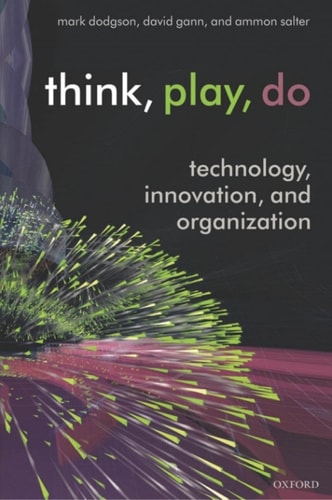
Think, Play, Do: Innovation, Technology, and Organization
0
0
As an Amazon Associate and affiliate partner, Menrva Books earns from qualifying purchases. Learn more
Author Description
The innovation process is the most important of all business processes. Innovation is the means by which value is constructed and efficiencies are created. It is the source of sustainable competitive advantage. This book shows how the innovation process is changing profoundly. Part of the change results from the application of new technologies to the innovation process itself. A new category of technology has emerged which we call 'innovation technology'. This includes simulation and modelling, visualization, and rapid prototyping technologies. When used effectively, innovation technology makes the innovation process more economical and ameliorates some of its uncertainties. These technological changes are accompanied by changing organization structures and skills requirements. The technologies are used in fast moving, creative environments and are suited to project-based organization. They also require the development of new 'craft' skills to realize the possibilities created by the new 'code'. The book outlines a new way of thinking about innovation. Traditional definitions of 'research', 'development' and 'engineering', imply a progressive linearity which doesn't exist in reality. They are also associated with organizational departments, which are breaking down where once they existed, and are in any case non-existent in the vast majority of firms. They also fail to capture the central importance of design in innovation. We propose a new schema for the innovation process: Think, Play, Do. Innovation requires creating new ideas and thinking about new options, playing with them to see if they are practical, economical and marketable, and then doing: making the innovation real. This new schema captures the emerging innovation process using a more contemporary idiom. The book reports in-depth studies from a number of companies and sectors. Major case studies of Procter and Gamble and Arup Partners are presented. It reports on the use of innovation technology in a ran
Menrva's Summary
THE THESIS
This book investigates how the integration of emerging 'innovation technologies'—such as simulation, visualization, and rapid prototyping—fundamentally alters the traditional innovation process within modern organizations. The authors, Ammon Salter, David Gann, and Mark Dodgson, leverage their expertise in technology management to challenge the outdated linear models of research and development. They argue that contemporary firms must adopt a more fluid, project-based framework, which they define through the 'Think, Play, Do' schema, to effectively manage the complexities of modern product creation.
THE SCOPE MAP
What You Will Find
- A conceptual framework for the 'Think, Play, Do' innovation cycle.
- Analysis of 'innovation technology' tools including simulation, modeling, and rapid prototyping.
- In-depth case studies of organizational practices at Procter and Gamble and Arup Partners.
- Examination of the shift from departmental silos to project-based organizational structures.
Scope Limits
- The text does not provide a comprehensive technical manual for specific software tools.
- It does not cover long-term historical innovation trends prior to the digital era.
THE AUTHORITY PERSPECTIVE
Experts recognize this work as a significant contribution to the study of organizational design and the practical application of digital tools in R&D. Readers frequently note the academic density of the prose, which is best suited for management professionals and students of innovation strategy.
Page Count:
276
Publication Date:
2005-01-01
Publisher:
Oxford University Press, U.S.A.
ISBN-10:
0191514942
ISBN-13:
9780191514944
Business
Technology management
Innovation
Organizational Theory
Community Tags
Other Editions(2)
Similar Books




Reader Comments
Share Your Thoughts
No comments yet. Be the first to share your thoughts!