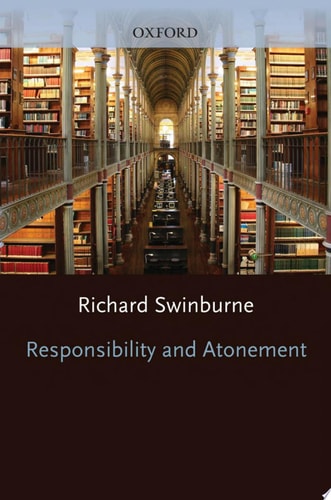
Responsibility and Atonement
0
0
As an Amazon Associate and affiliate partner, Menrva Books earns from qualifying purchases. Learn more
Author Description
When We Do Good Or Harm To Others We Acquire Merit Or Guilt, Deserve Praise Or Blame, Reward Or Punishment, And We May Need To Make Atonement. Others May Need To Forgive Us, Or Show Us Mercy. In The First Part Of This Book, The Author Gives An Account Of How These Moral Concepts Apply To Humans In Their Dealings With Each Other. In The Second Part, He Applies The Results Of Part 1 To Reach Conclusions About Which Versions Of Traditional Christian Doctrines Utilizing These Notions Are Morally Acceptable. He Considers The Doctrines Of Sin And Original Sin, Redemption, Sanctification, Heaven, And Hell.
Menrva's Summary
THE THESIS
This work investigates the moral mechanics of human responsibility and how these concepts inform and validate traditional Christian doctrines. Richard Swinburne, a prominent philosopher of religion, utilizes analytical philosophical methods to dissect the nature of merit, guilt, and atonement. He establishes a framework for human moral interaction before applying these principles to evaluate the ethical coherence of theological concepts such as original sin, redemption, and the afterlife.
THE SCOPE MAP
What You Will Find
- A systematic analysis of moral concepts including praise, blame, punishment, and forgiveness.
- An examination of the relationship between free will and moral responsibility.
- A theological application of moral theory to doctrines of sin, sanctification, and eternal destiny.
Scope Limits
- The text does not provide a comprehensive history of Christian dogma, focusing instead on the logical and moral consistency of specific doctrines.
- It does not address non-Christian religious perspectives on atonement or moral responsibility.
THE AUTHORITY PERSPECTIVE
Scholars and students of philosophy of religion frequently cite this text as a rigorous exercise in applying analytical ethics to systematic theology. Readers often note the dense, technical nature of the prose, which requires a foundational understanding of both moral philosophy and Christian doctrine to fully grasp the author's arguments.
Page Count:
222
Publication Date:
1989-01-01
Publisher:
Oxford University Press
ISBN-10:
0191520020
ISBN-13:
9780191520020
Philosophy
Moral Philosophy
Ethics
Christian philosophy
Theology
Responsibility
Atonement