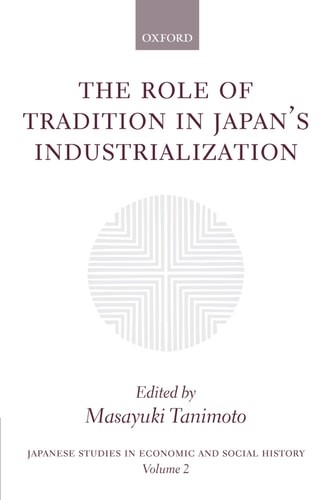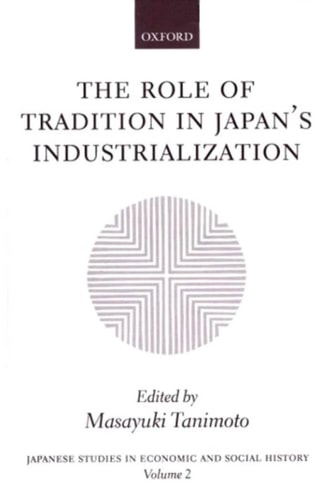
The Role of Tradition in Japan's Industrialization: Another Path to Industrialization
0
0
As an Amazon Associate and affiliate partner, Menrva Books earns from qualifying purchases. Learn more
Author Description
This volume explores Japan's industrialization from the perspective of "indigenous development", focusing on what may be identified as "traditional" or "indigenous" factors. Japanese industrialization has often been described as the process of transferring or importing technology and organization from Western countries. Recent research has, however, shown that economic development had already begun in pre-modern period (Tokugawa-era) in Japan. This economic development not only prepared Japan for the transfer from the West, but also formed the basis of the particular industrialization process which paralleled transplanted industrialization in modern Japan. The aim of the volume is to demonstrate this aspect of industrialization through the detailed studies of so-called "indigenous" industries. This collection of papers looks at the industries originating in the Tokugawa-era, such as weaving, silk-reeling and pottery, as well as the newly developed small workshops engaged in manufacturing machinery, soap, brash, buttons, etc. Small businesses in the tertiary sector, transportation and commerce, are also observed. Available for the first time in English, these papers shed new light on the role of "indigenous development" and our understanding of the dualistic character of Japan's economic development.
Menrva's Summary
THE THESIS
This volume investigates the extent to which indigenous, pre-modern economic structures facilitated Japan's rapid industrialization, challenging the narrative that modernization was solely a result of Western technology transfer. Masayuki Tanimoto, a specialist in Japanese economic history, compiles a series of scholarly papers that analyze the Tokugawa-era foundations of Japanese industry. By examining the transition from traditional craft-based production to modern manufacturing, the author argues that indigenous development provided a necessary framework for the country's unique industrial trajectory.
THE SCOPE MAP
What You Will Find
- Analysis of Tokugawa-era industries including weaving, silk-reeling, and pottery.
- Examination of small-scale workshops producing machinery, soap, and consumer goods.
- Exploration of the tertiary sector, specifically transportation and commerce.
- A framework for understanding the dualistic nature of Japan's economic growth.
Scope Limits
- The text focuses primarily on the transition period and does not provide a comprehensive history of post-WWII economic policy.
- It does not extensively cover large-scale heavy industry conglomerates, focusing instead on small-to-medium enterprises.
THE AUTHORITY PERSPECTIVE
Scholars and historians recognize this collection as a significant contribution to the understanding of Japan's economic development, particularly for its focus on the pre-modern roots of industrial success. Readers frequently note the academic density of the prose, which makes it a valuable resource for students and researchers of economic history.
Page Count:
368
Publication Date:
2006-01-01
Publisher:
Oxford University Press
ISBN-10:
0191522015
ISBN-13:
9780191522017
History
Asian History
Economics history
Economic History
Sociology