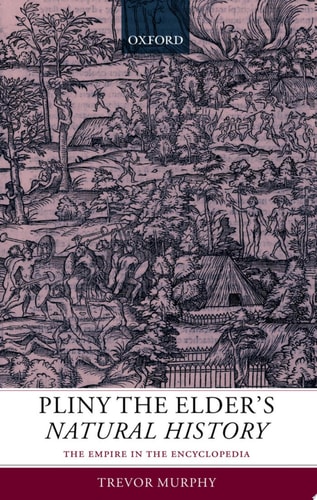
Pliny the Elder's Natural History: The Empire in the Encyclopedia
0
0
As an Amazon Associate and affiliate partner, Menrva Books earns from qualifying purchases. Learn more
Author Description
The most important surviving encyclopedia from the ancient world, Pliny the Elder's Natural History is unparalleled as a guide to the cultural meanings of everyday things in first-century Rome. As part of a new direction in classical scholarship, Trevor Murphy reads the work not just for the information it contains, but to understand how and why Pliny collects and presents information as he does. Concentrating on the geographic and ethnographic information in Pliny, Murphy demonstrates the work's political importance. The selection and arrangement of the encyclopedia's material show that it is more than an instrument of reference: it is a monument to the power of Roman imperial society.
Menrva's Summary
THE THESIS
This book investigates how Pliny the Elder’s Natural History functions as a deliberate political instrument rather than a mere repository of ancient knowledge. Trevor Murphy, a scholar of classical literature, examines the structural and thematic choices made by Pliny to argue that the encyclopedia serves as a manifestation of Roman imperial ideology. By analyzing the selection and arrangement of ethnographic and geographic data, the author reveals the underlying motivations behind the construction of this massive ancient text.
THE SCOPE MAP
What You Will Find
- Analysis of the geographic and ethnographic sections of the Natural History
- Examination of the encyclopedia as a tool for imperial propaganda
- Theoretical framework for reading ancient reference works as cultural artifacts
Scope Limits
- Does not provide a comprehensive translation or line-by-line commentary of the entire thirty-seven books
- Focuses primarily on political and cultural implications rather than the scientific accuracy of Pliny’s observations
THE AUTHORITY PERSPECTIVE
Scholars recognize this work as a significant contribution to the study of Roman intellectual history and the function of encyclopedic writing. Readers frequently note the academic density of the prose, which is intended for those familiar with classical scholarship and Roman history.
Page Count:
233
Publication Date:
2004-01-01
Publisher:
Oxford University Press
ISBN-10:
0191532339
ISBN-13:
9780191532337
History
Natural History
Ancient - Rome
English
Reference works
English & College Success
Literary Criticism
Community Tags
Similar Books