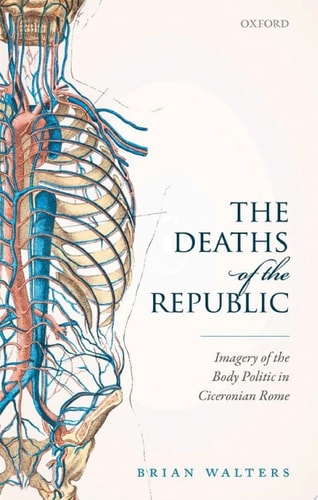
The Deaths of the Republic: Imagery of the Body Politic in Ciceronian Rome
0
0
As an Amazon Associate and affiliate partner, Menrva Books earns from qualifying purchases. Learn more
Author Description
That the Roman republic died is a commonplace often repeated. In extant literature, the notion is first given form in the works of the orator Cicero (106-43 BCE) and his contemporaries, though the scattered fragments of orators and historians from the earlier republic suggest that the idea was hardly new. In speeches, letters, philosophical tracts, poems, and histories, Cicero and his peers obsessed over the illnesses, disfigurements, and deaths that were imagined to have beset their body politic, portraying rivals as horrific diseases or accusing opponents of butchering and even murdering the state. Body-political imagery had long enjoyed popularity among Greek authors, but these earlier images appear muted in comparison and it is only in the republic that the body first becomes fully articulated as a means for imagining the political community. In the works of republican authors is found a state endowed with nervi, blood, breath, limbs, and organs; a body beaten, wounded, disfigured, and infected; one with scars, hopes, desires, and fears; that can die, be killed, or kill in turn. Such images have often been discussed in isolation, yet this is the first book to offer a sustained examination of republican imagery of the body politic, with particular emphasis on the use of bodily-political images as tools of persuasion and the impact they exerted on the politics of Rome in the first century BCE.
Menrva's Summary
THE THESIS
This book investigates how the metaphor of the body politic served as a primary rhetorical and conceptual framework for understanding the decline of the Roman Republic. Brian Walters, a scholar of classical literature and history, examines the transition from scattered early references to the fully articulated bodily imagery found in the works of Cicero and his contemporaries. He argues that these descriptions of the state as a living, suffering, and dying organism were not merely decorative, but were active tools of political persuasion used to diagnose and influence the volatile political climate of the first century BCE.
THE SCOPE MAP
What You Will Find
- An analysis of bodily metaphors including disease, disfigurement, and physical trauma within Roman political discourse.
- A comparative study of Greek precedents versus the unique Roman articulation of the state as a biological entity.
- A detailed examination of Cicero's speeches, letters, and philosophical writings as primary evidence.
Scope Limits
- The study focuses primarily on the first century BCE and does not provide an exhaustive history of the entire Roman Republic.
- The analysis is centered on literary and rhetorical imagery rather than a comprehensive military or economic history of the period.
THE AUTHORITY PERSPECTIVE
Scholars recognize this work as a significant contribution to the study of Roman political rhetoric and the conceptualization of the state in antiquity. Readers frequently note the academic density of the prose, which is well-suited for researchers and students of classical history.
Page Count:
176
Publication Date:
2020-01-01
Publisher:
OUP Oxford
ISBN-10:
0192575953
ISBN-13:
9780192575951
History
Criticism history
Literary Criticism
English
Ancient - Rome
Roman History
In literature
English & College Success
Community Tags
Similar Books