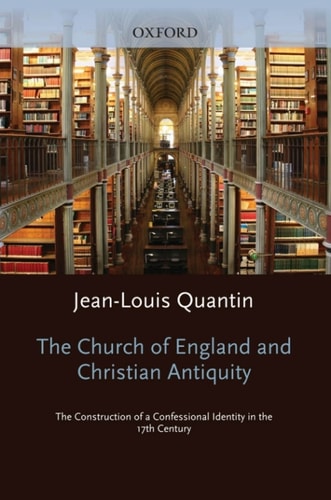
The Church of England and Christian Antiquity: The Construction of a Confessional Identity in the 17th Century
0
0
As an Amazon Associate and affiliate partner, Menrva Books earns from qualifying purchases. Learn more
Author Description
Today, the statement that Anglicans are fond of the Fathers and keen on patristic studies looks like a platitude. Like many platitudes, it is much less obvious than one might think. Indeed, it has a long and complex history. Jean-Louis Quantin shows how, between the Reformation and the last years of the Restoration, the rationale behind the Church of England's reliance on the Fathers as authorities on doctrinal controversies, changed significantly. Elizabethan divines, exactly like their Reformed counterparts on the Continent, used the Church Fathers to vindicate the Reformation from Roman Catholic charges of novelty, but firmly rejected the authority of tradition. They stressed that, on all questions controverted, there was simply no consensus of the Fathers. Beginning with the 'avant-garde conformists' of early Stuart England, the reference to antiquity became more and more prominent in the construction of a new confessional identity, in contradistinction both to Rome and to Continental Protestants, which, by 1680, may fairly be called 'Anglican'. English divines now gave to patristics the very highest of missions. In that late age of Christianity - so the idea ran - now that charisms had been withdrawn and miracles had ceased, the exploration of ancient texts was the only reliable route to truth. As the identity of the Church of England was thus redefined, its past was reinvented. This appeal to the Fathers boosted the self-confidence of the English clergy and helped them to surmount the crises of the 1650s and 1680s. But it also undermined the orthodoxy that it was supposed to support.
Menrva's Summary
THE THESIS
This work investigates how the Church of England transformed its reliance on the Church Fathers to construct a distinct confessional identity during the 17th century. Jean-Louis Quantin, a scholar of early modern intellectual history, examines the shift from Elizabethan-era usage of patristics as a defensive tool against Roman Catholic claims of novelty to the later Stuart-era elevation of antiquity as the primary arbiter of doctrinal truth. By analyzing the writings of English divines, the author argues that this intellectual evolution served to differentiate Anglicanism from both Continental Protestantism and Roman Catholicism, ultimately reshaping the church's self-conception.
THE SCOPE MAP
What You Will Find
- Analysis of the changing role of patristic authority between the Reformation and the Restoration.
- Examination of the 'avant-garde conformists' of early Stuart England.
- Discussion of how the exploration of ancient texts was utilized to navigate the crises of the 1650s and 1680s.
- Historical context regarding the rejection of tradition versus the reliance on consensus.
Scope Limits
- The study focuses primarily on the intellectual and ecclesiastical history of the Church of England.
- It does not provide a comprehensive history of all 17th-century theological debates outside the scope of patristic usage.
THE AUTHORITY PERSPECTIVE
Scholars recognize this text as a rigorous, highly detailed examination of the intellectual history of the Church of England. Readers frequently note the academic density of the prose, which is intended for specialists in early modern theology and ecclesiastical history.
Page Count:
496
Publication Date:
2009-01-01
Publisher:
OUP Oxford
ISBN-10:
0191565342
ISBN-13:
9780191565342
History
European History
Patristics
Fathers of the church
Church History
17th Century
Anglicanism
Theology
Church of England
Community Tags
Similar Books