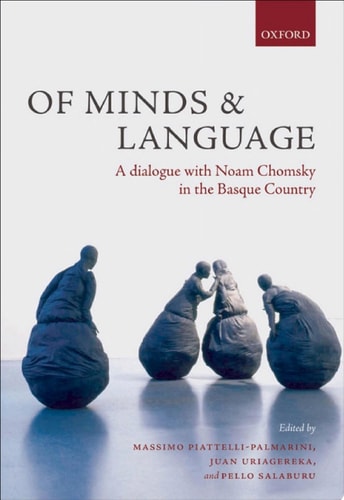
Of Minds and Language
0
0
As an Amazon Associate and affiliate partner, Menrva Books earns from qualifying purchases. Learn more
Author Description
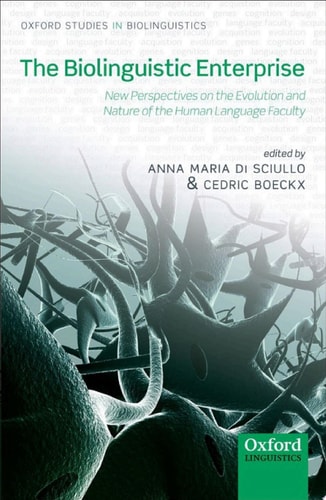
This Book Presents A State-of-the-art Account Of What We Know And Would Like To Know About Language, Mind, And Brain. Chapters By Leading Researchers In Linguistics, Psycholinguistics, Language Acquisition, Cognitive Neuroscience, Comparative Cognitive Psychology, And Evolutionary Biology Are Framed By An Introduction And Conclusion By Noam Chomsky, Who Places The Biolinguistic Enterprise In An Historical Context And Helps Define Its Agenda For The Future. The Questions Explored Include: What Is Our Tacit Knowledge Of Language? What Is The Faculty Of Language? How Does It Develop In The Individual? How Is That Knowledge Put To Use? How Is It Implemented In The Brain? How Did That Knowledge Emerge In The Species? The Book Includes The Contributor's Key Discussions, Which Dramatically Bring To Life Their Enthusiasm For The Enterprise And Skill In Communicating Across Disciplines. Everyone Seriously Interested In How Language Works And Why It Works The Way It Does Are Certain To Find, If Not All The Answers, Then A Convincing, Productive, And Lively Approach To The Endeavour.
Menrva's Summary
THE THESIS
This volume investigates the fundamental nature of the human language faculty, specifically how it is represented in the mind, implemented in the brain, and evolved within the species. The authors, including prominent researchers in linguistics and cognitive science, present a multidisciplinary framework known as the biolinguistic enterprise. By synthesizing perspectives from psychology, biology, and neuroscience, the text seeks to define the current state of knowledge and establish a research agenda for future inquiry into the biological basis of language.
THE SCOPE MAP
What You Will Find
- Theoretical models of language acquisition and development
- Comparative analysis of cognitive psychology across species
- Neurobiological implementations of linguistic knowledge
- Historical context of the biolinguistic program provided by Noam Chomsky
Scope Limits
- Does not provide a comprehensive history of all linguistic theories
- Does not offer definitive answers to all questions regarding language evolution
THE AUTHORITY PERSPECTIVE
Experts recognize this collection as a significant synthesis of the biolinguistic approach, effectively bridging the gap between theoretical linguistics and empirical cognitive science. Readers frequently note the academic density of the prose, which is best suited for those with a foundational understanding of the field.
Page Count:
480
Publication Date:
2009-01-01
Publisher:
Oup Oxford
ISBN-10:
0191562602
ISBN-13:
9780191562600
Linguistics
Evolutionary Biology
Psycholinguistics
Philosophy of
Neuroscience
Community Tags
Similar Books