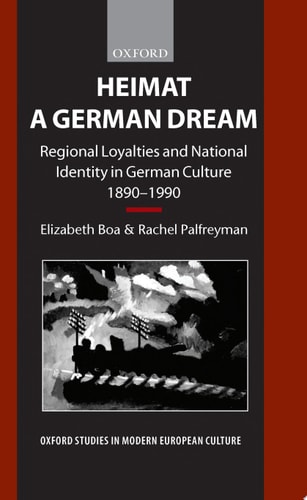
Heimat: A German Dream
0
0
As an Amazon Associate and affiliate partner, Menrva Books earns from qualifying purchases. Learn more
Author Description
The Discourse Of Heimat, Meaning Homeland Or Roots, Has Been A Medium Of Debate On German Identity Between Region And Nation For At Least A Century. Four Phases Parallel Germany's Discontinuous History: Heimat Literature As A Response To Modernization And To Regional Tensions Before The First World War; The Inter-war Period When Heimat Divided Into Racist Ideology, Left-wing Opposition, And Inner Resistance To The Third Reich; A Post-war Dialectic Between Escapist 1950s Heimat Films And Right-wing Claims To The Lost Lands In The East To Which Anti-heimat Theatre And Films In The 1960s And 1970s Were A Response, With The Urban Heimat In Gdr Films Adding A Socialist Twist; Regionalism And Green Politics In The 1980s And German Identity Beyond Cold War Divisions. A Key Point Of Reference In Current Debates On German History, Heimat Looks Likely To Continue In Postmodern And Multicultural Mode.
Menrva's Summary
THE THESIS
This work investigates the evolution of the concept of 'Heimat' as a central, contested pillar of German identity throughout the twentieth century. The authors, Elizabeth Boa and Rachel Palfreyman, utilize a chronological framework to analyze how the term has been repurposed by various political and social factions. By examining literature, film, and theater, they argue that the meaning of 'homeland' has shifted in response to modernization, war, and the changing geopolitical landscape of Germany.
THE SCOPE MAP
What You Will Find
- A four-phase historical analysis of the Heimat discourse from the pre-WWI era to the post-Cold War period.
- Examination of the transition from regionalist literature to socialist urban depictions in the GDR.
- Comparative analysis of right-wing ideological appropriation versus anti-Heimat artistic responses.
Scope Limits
- The text does not provide an exhaustive catalog of every regional Heimat variation.
- The analysis focuses primarily on media and political discourse rather than individual psychological case studies.
THE AUTHORITY PERSPECTIVE
Scholars and students of German history frequently cite this text as a foundational resource for understanding the complexities of national identity. Readers often note the academic density of the prose, which provides a rigorous examination of how cultural symbols are manipulated over time.
Page Count:
246
Publication Date:
2000-01-01
Publisher:
Oup Oxford
ISBN-10:
0191583545
ISBN-13:
9780191583544
History
German Studies
Sociology
Community Tags
Similar Books