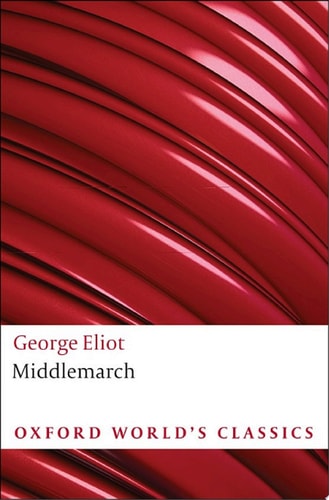
Middlemarch
0
0
As an Amazon Associate and affiliate partner, Menrva Books earns from qualifying purchases. Learn more
Author Description
Writing At The Very Moment When The Foundations Of Western Thought Were Being Challenged And Undermined, George Eliot Fashions In Middlemarch (1871-2) The Quintessential Victorian Novel, A Concept Of Life And Society Free From The Dogma Of The Past Yet Able To Confront The Scepticism That Was Taking Over The Age. In A Panoramic Sweep Of English Life During Thr Years Leading Up To The First Reform Bill Of 1832, Eliot Explores Nearly Every Subject Of Concern To Modern Life: Art, Religion, Science, Politics, Self, Society, Human Relationships. Among Her Characters Are Some Of The Most Remarkable Portraits In English Literature: Dorothea Brooke, The Heroine, Idealistic But Näive; Rosamond Vincy, Beautiful And Egoistic: Edward Casaubon, The Dry-as-dust Scholar: Tertius Lydgate, The Brilliant But Morally-flawed Physician: The Passionate Artist Will Ladislaw: And Fred Vincey And Mary Garth, Childhood Sweethearts Whose Charming Courtship Is One Of The Many Humorous Elements In The Novel's Rich Comic Vein. Felicia Bonaparte Has Provided A New Introduction For This Updated Edition, The Text Of Which Is Taken From David Carroll's Clarendon Middlemarch (1986), The First Critical Edition.
Menrva's Summary
THE PULSE
The narrative centers on the idealistic Dorothea Brooke and the ambitious physician Tertius Lydgate as they navigate the restrictive social and political climate of a provincial English town on the brink of the 1832 Reform Bill. Dorothea seeks intellectual fulfillment through a marriage to the scholar Edward Casaubon, only to find her aspirations stifled by his rigid and pedantic nature. Simultaneously, Lydgate struggles to maintain his professional integrity and scientific goals against the pressures of local politics and his own ill-fated marriage to the superficial Rosamond Vincy. The novel employs an omniscient, philosophical narrator who observes the interconnected lives of the townspeople with clinical precision and moral depth. The story unfolds through a complex, multi-stranded structure that examines the friction between individual desire and the demands of a changing society.
INSIDE THE PAGES
- Omniscient narrator providing philosophical commentary
- Multi-stranded plot structure involving multiple families
- Detailed exploration of provincial social hierarchies
- Integration of political history regarding the 1832 Reform Bill
- Character-driven psychological realism
- Use of irony to highlight character flaws and social hypocrisy
- Contrast between idealistic ambition and mundane reality
- Extensive focus on the intersection of science, religion, and art
THE COLLECTIVE ECHO
Readers and critics frequently highlight the novel's immense scope and its ability to capture the intricacies of human motivation within a specific historical context. Discussion often centers on the psychological depth of the characters, particularly the nuanced portrayals of Dorothea and Lydgate as they confront their personal limitations. Many observers note the effectiveness of the narrator's voice, which bridges the gap between the characters' internal experiences and the broader societal shifts of the Victorian era. The pacing is often described as deliberate, allowing for a thorough examination of the thematic threads that connect the various subplots. This work remains a primary reference point for discussions regarding the development of the realist novel and its capacity to mirror the complexities of modern life.
Page Count:
864
Publication Date:
1997-01-01
Publisher:
Oup Oxford
ISBN-10:
0191585610
ISBN-13:
9780191585616
Historical
Realist
classic
Social Commentary
Victorian
Community Tags
Other Editions(15)
Independently published
2023
Default edition
Independently published
2023

Independently published
2023

Independently published
2023
Independently published
2023
Independently published
2020

Independently published
2020
Oxford University Press
2008
Oup Oxford
2008
Tantor Audio
2006

Naxos Audio Books
2000
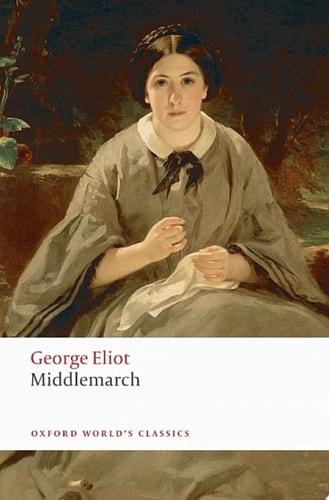
Oxford University Press
1997
Oup Oxford
1997
Oxford University Press
1991
Oxford University Press
1987
Similar Books

Reader Comments
Share Your Thoughts
No comments yet. Be the first to share your thoughts!